
Last updated November 16, 2026
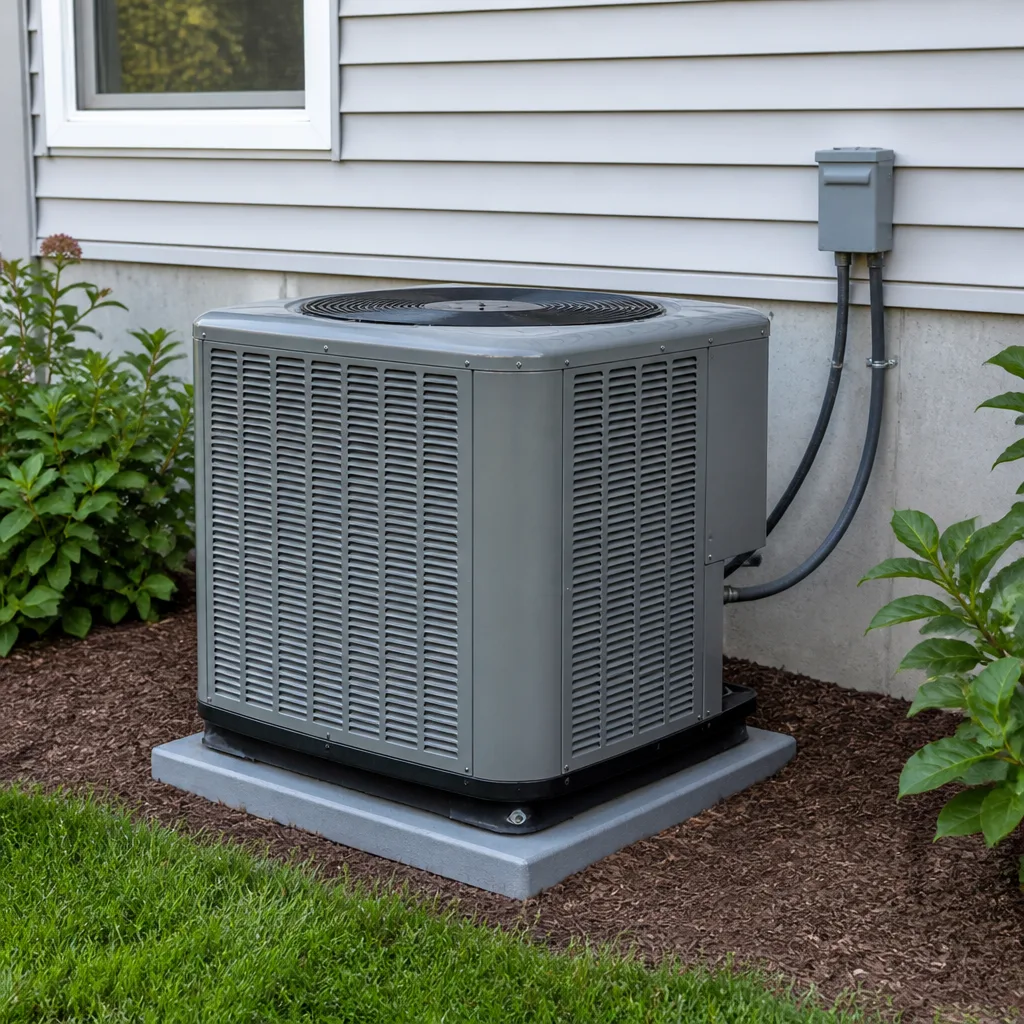 AC repair
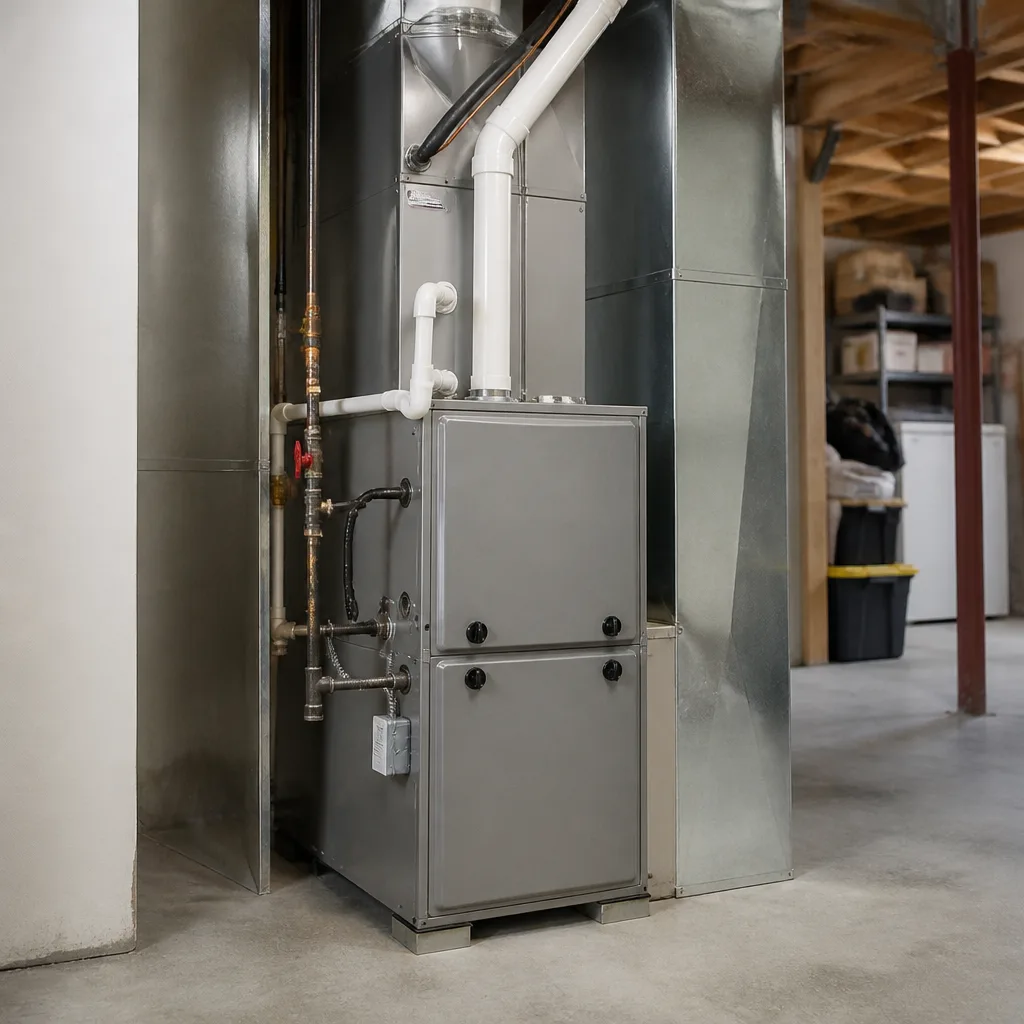 Furnace & heating
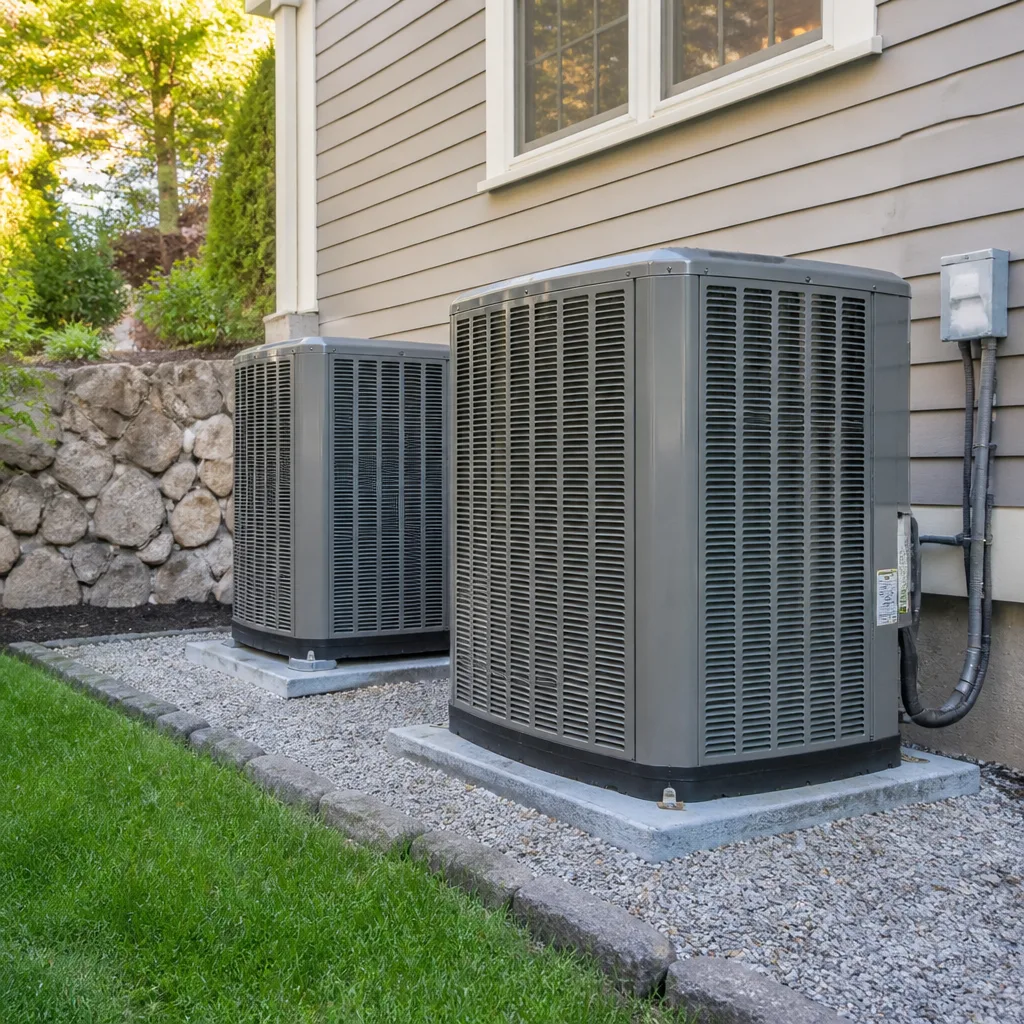 Heat pumps
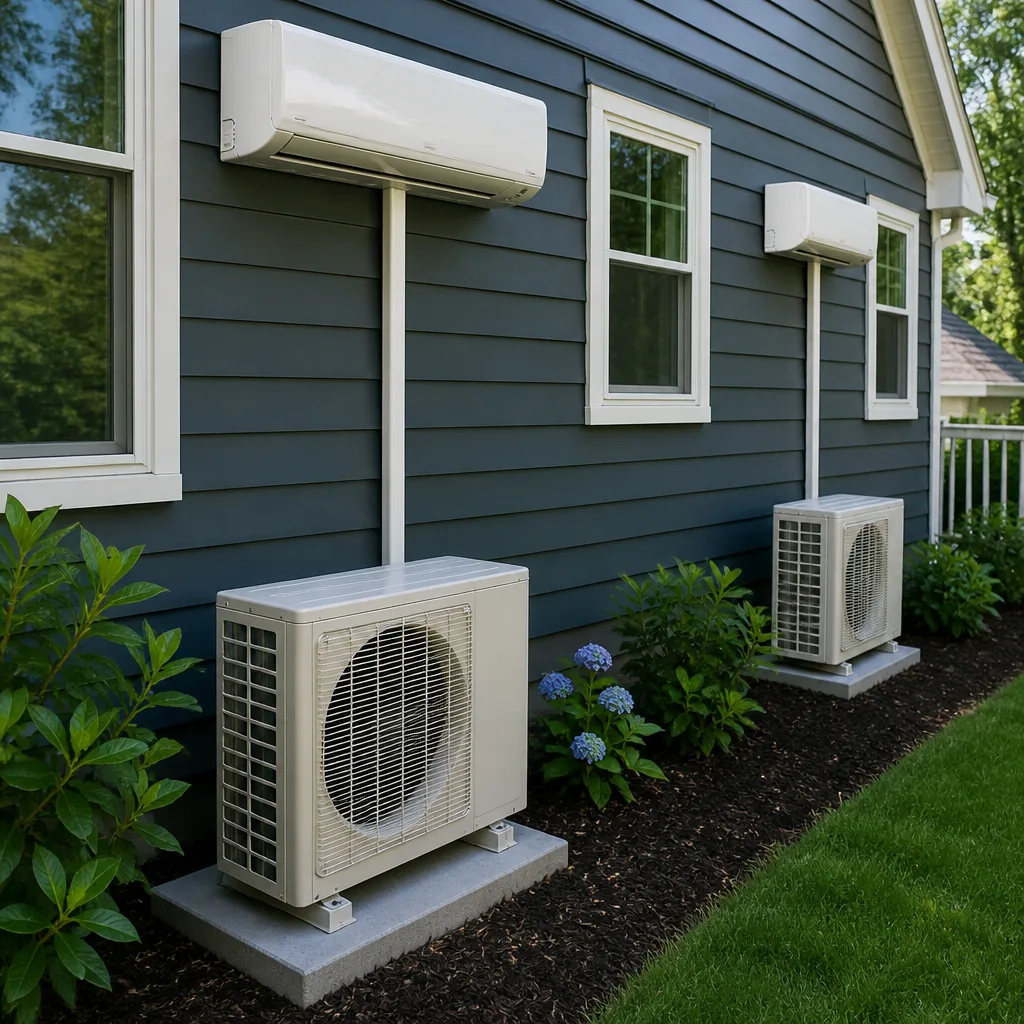 Ductless mini splits
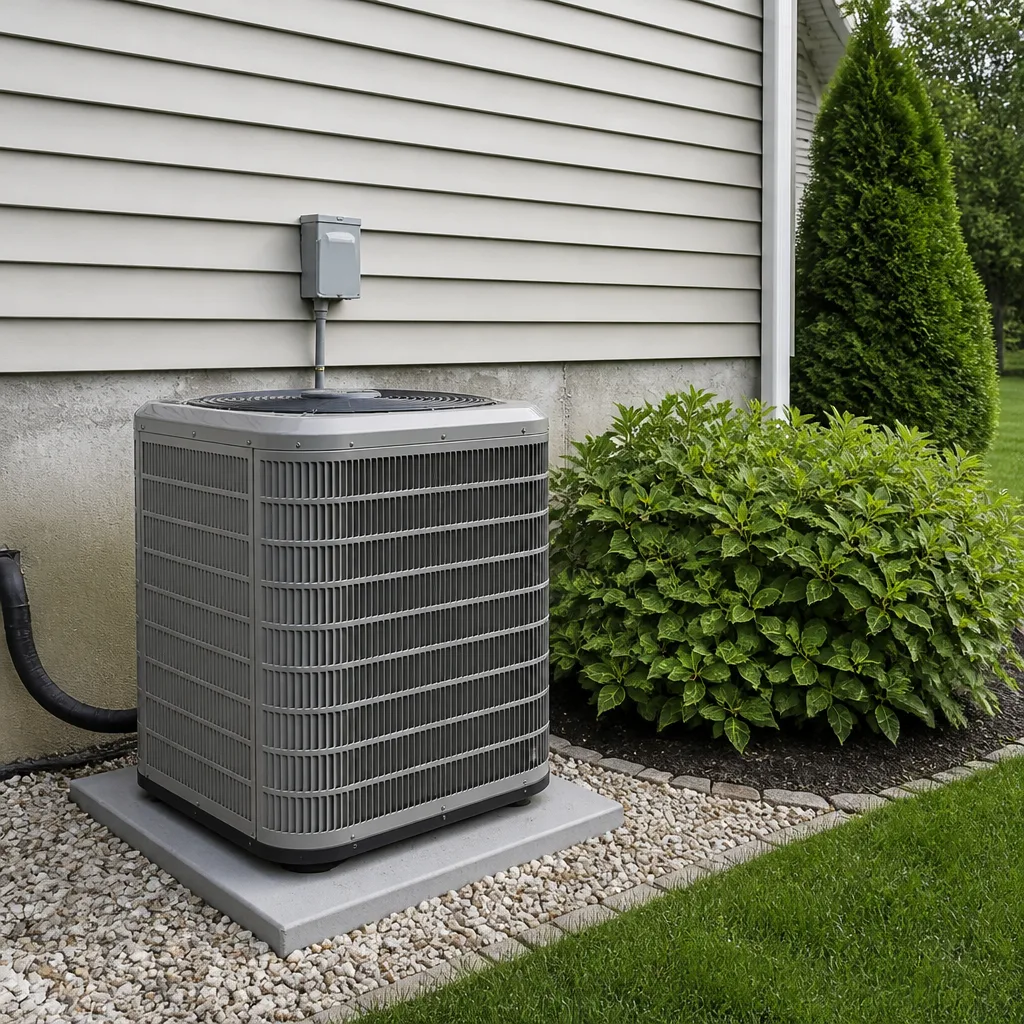 Carrier
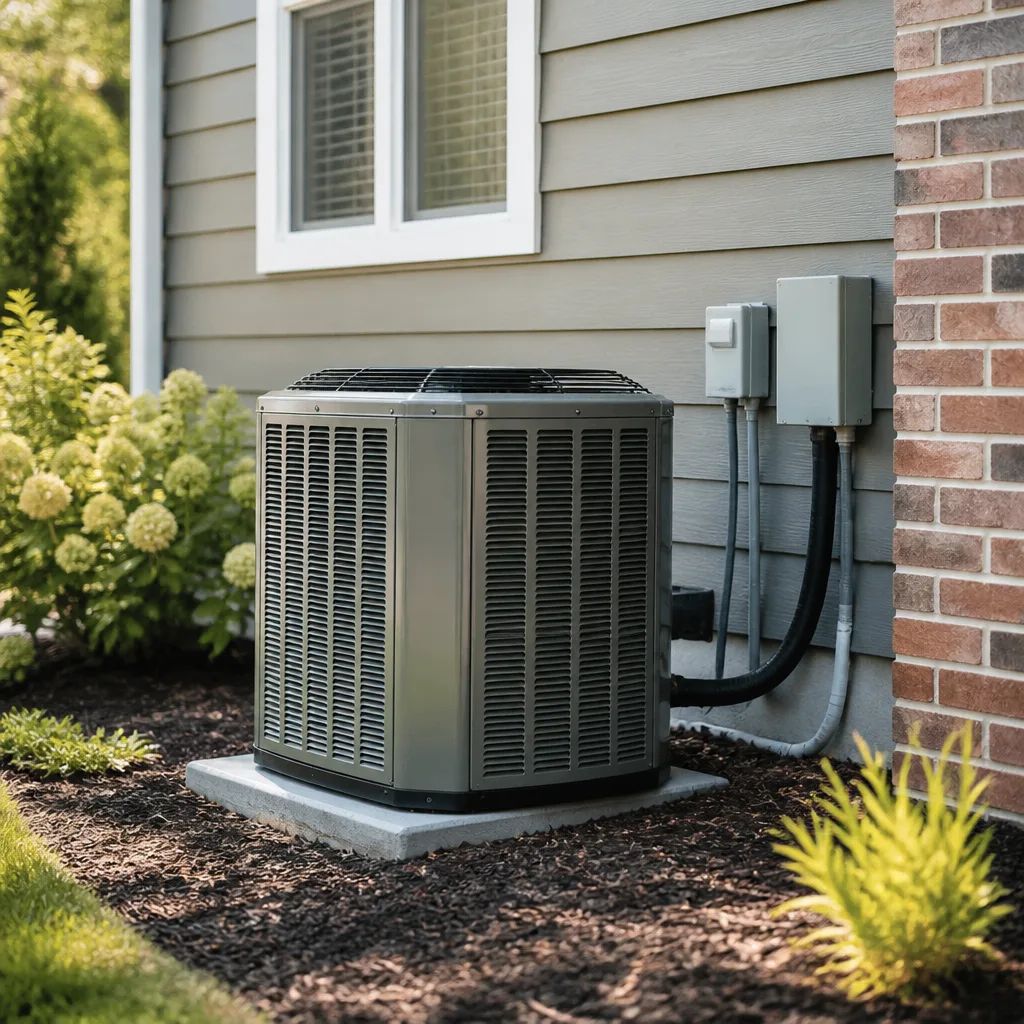 Trane
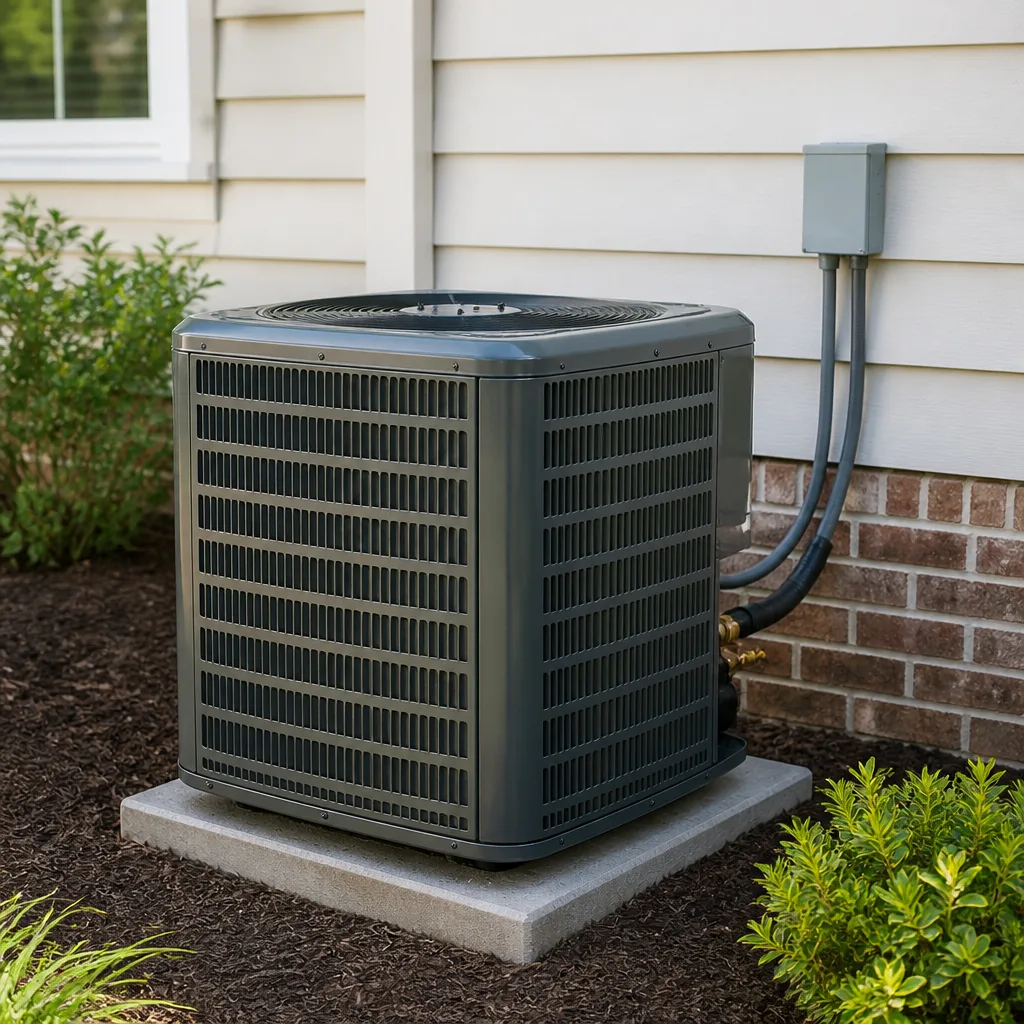 Goodman
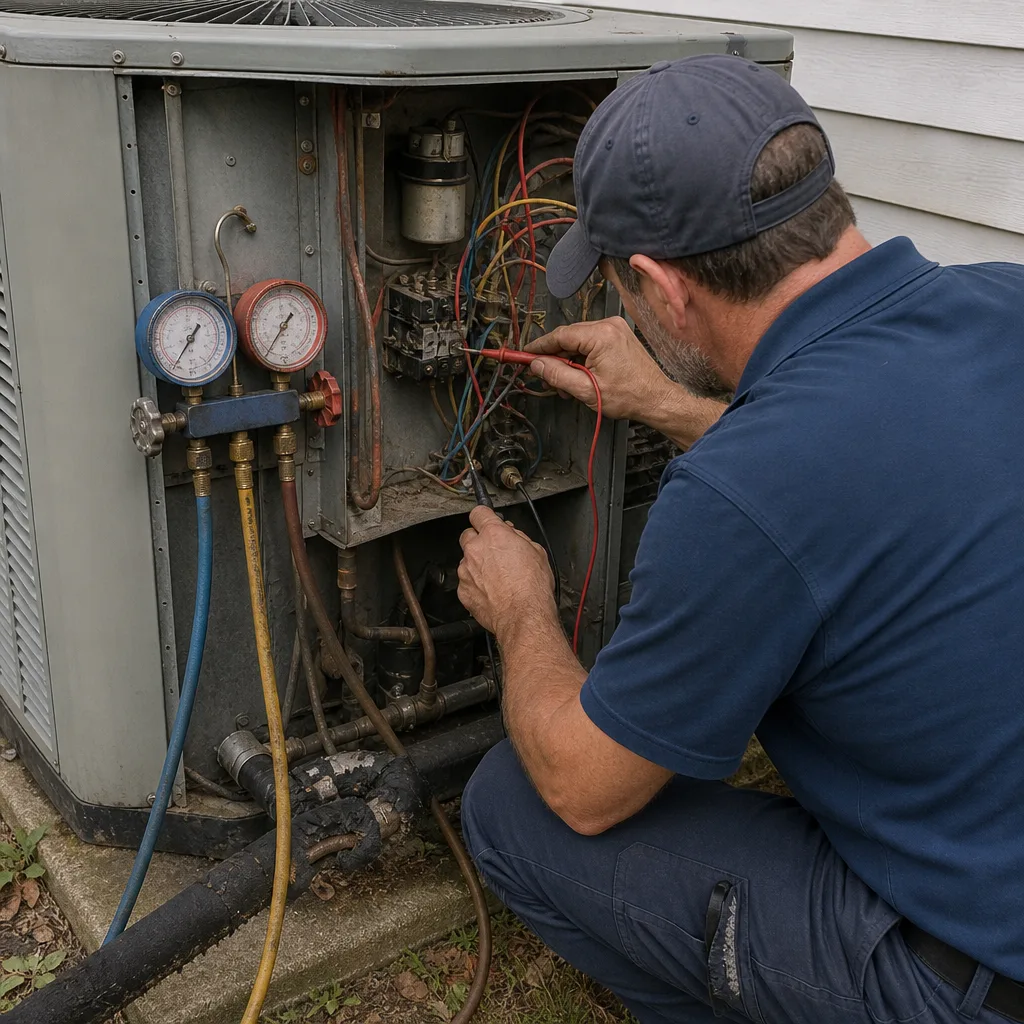
Seasonal tune-up and full diagnostic on your Carrier, Trane, or Goodman system - readings shown to you before any repair is proposed
Diagnosis first, numbers second - you approve the repair price before a single part goes in.
Get your free estimateThe Complete AC Installation Guide for Palm Coast Homeowners
Most AC installation guides are written for a mythical average climate. Somewhere with four real seasons, moderate humidity, and a cooling season that politely ends in September. Palm Coast isn’t that place. This city averages 234 days a year above 80°F, and the Atlantic sits close enough that the air your system pulls in is often heavy with moisture. A unit sized, sealed, or positioned for a drier, cooler climate will run longer, work harder, and fail sooner here. This guide starts with Palm Coast conditions, not with a catalog. You’ll learn how load calculations, corrosion protection, permits, ductwork, and timelines actually work in this market, so you can ask better questions and spot a shortcut before it costs you.
Quick Answer
A successful AC installation in Palm Coast starts with a proper Manual J load calculation, not a square-footage guess, because the city’s long cooling season and high humidity change what your home actually needs. You’ll also want coastal-rated equipment and coil protection if you’re near the Intracoastal, a Flagler County permit with inspection before the system runs, and ductwork decisions made for a hot, humid attic. Expect roughly one to two weeks from signed contract to first cool air, longer if equipment has to be ordered.
Styles & brands we work with
- AC repair
- Furnace & heating
- Heat pumps
- Ductless mini splits
- Carrier
- Trane
- Goodman
Table of Contents
- Why Load Calculations Matter More Here Than Inland
- Salt Air, Humidity, and Equipment Selection
- Permits and Inspections in Flagler County
- Attic Ductwork in a Heat-Soaked Climate
- Sizing, SEER2, and the Numbers That Matter
- Choosing a Brand Without the Sales Pitch
- The Timeline From Contract to Cool Air
- Repair or Replace: The Honest Answer
Why Load Calculations Matter More Than Inland Florida Cities
On Florida’s interior, a lot of installers get away with the old rule of thumb: roughly one ton of cooling per 500 to 600 square feet. That shortcut is risky anywhere. In Palm Coast it’s worse. Here’s why.
The longer your cooling season runs, the more hours your system spends near its design limit. A unit that’s oversized by half a ton short-cycles constantly, never runs long enough to pull humidity out of the air, and leaves rooms feeling clammy even when the thermostat reads cool. A unit that’s undersized runs nonstop during the hottest weeks and never quite catches up. In a climate with 234 days above 80°F, both mistakes get amplified because there’s very little “shoulder season” to hide them.
A Manual J load calculation accounts for the things a square-footage guess ignores:
- Window count, orientation, and glass type (west-facing glass loads a room far harder than north-facing)
- Attic insulation levels and roof color, which drive how much heat radiates into the living space
- Air infiltration, or how leaky the envelope is
- Internal gains from people, appliances, and lighting
- Duct location and whether the ductwork runs through a 130°F attic
In our experience, this is the single step most often skipped by installers who quote over the phone. If a contractor hands you a price without measuring rooms, checking window orientation, or asking about insulation, they’re guessing. On a Palm Coast home, a guess can mean a system that never quite dehumidifies the house. If you want a load calculation done right, start with AC installation and ask directly whether Manual J is part of the quote.
Salt Air, Humidity, and Equipment Selection
Salt air is a real equipment factor in Palm Coast, and it doesn’t stop at the beach. Homes within a few miles of the Intracoastal and the Atlantic see measurably faster corrosion on outdoor condenser coils, cabinet panels, and fasteners than homes further inland. If your condenser sits outside in the open, exposed to onshore breezes, standard coils can pit and lose efficiency years before the compressor gives out.
Here’s what actually protects equipment in this environment:
- Coastal-rated coil coatings. Look for factory-applied corrosion protection on the outdoor coil, not a field-applied spray. Brands like Rheem and Bryant offer coastal packages on select lines, and York and Daikin have their own corrosion-resistant options. Ask your installer to confirm what’s actually specified on the model number.
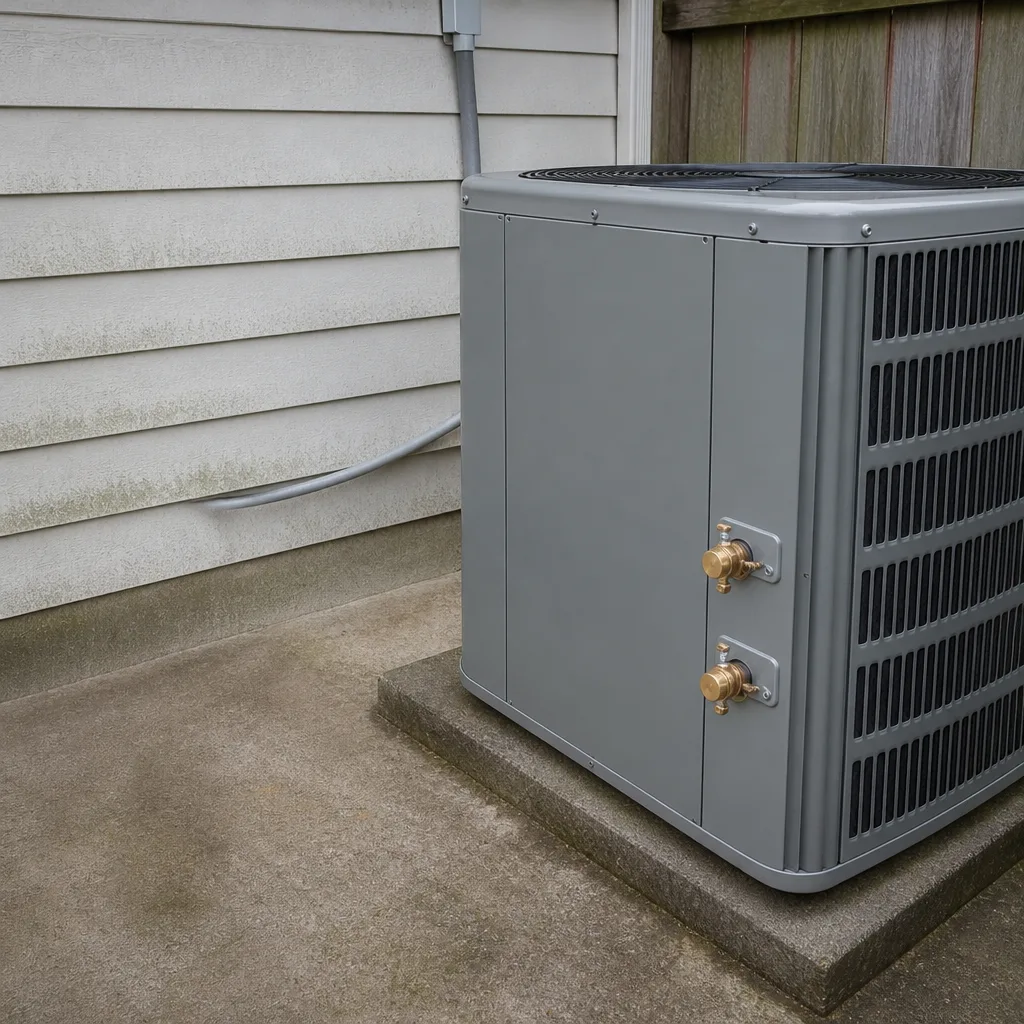
- Coil placement. Keep the condenser off the ground on a proper pad, away from sprinkler overspray, and out of the path of wind-driven mist. A unit tucked against a sea-facing wall collects salt faster than one on the leeward side.
- Rinsing schedule. Outdoor coils in salt-influenced areas benefit from periodic freshwater rinsing. This isn’t a DIY project once the unit is running; it’s part of routine seasonal service.
- Humidity control. Palm Coast’s summer air often sits above 90% relative humidity. A system that’s correctly sized and has a variable-speed or two-stage blower will run longer at lower output and pull more moisture from the air. Single-stage units can work here, but sizing and duct sealing have to be exactly right.
None of this requires you to buy the most expensive system. It requires the installer to match equipment to your location. A home three blocks from the Intracoastal and a home off Palm Coast Parkway have different corrosion exposure, and a brand-neutral installer should say so.
Permits and Inspections in Flagler County
An AC replacement in Palm Coast requires a mechanical permit, and skipping it is a mistake with real consequences. Unpermitted work can complicate a future home sale, void manufacturer warranties if the install doesn’t meet spec, and leave you without recourse if something fails. Florida law places the permit responsibility on the property owner, even when the contractor pulls it.
Here’s how the permit and inspection process usually goes:
- Contractor pulls the permit. The licensed contractor of record files with the City of Palm Coast or Flagler County, depending on where the home sits, before any work begins. Ask for the permit number in writing.
- Rough-in inspection if applicable. For a straight replacement, this is often a single final inspection. For a change-out that includes new ductwork or electrical modifications, there may be a rough-in stage.
- Final inspection. An inspector confirms the equipment matches the permitted model, the disconnect and electrical connections are correct, the condensate drain is properly routed, and the system is operational.
- Permit close-out. Once the inspection passes, the permit is closed. Keep the documentation with your home records.
A few local notes. Cities and counties periodically update which edition of the Florida Building Code and Mechanical Code they enforce, so ask your contractor what the current requirements are rather than assuming. Also, if you’re in a deed-restricted community, an HOA architectural review may be required before a new outdoor unit goes in; that’s separate from the permit and often the source of small delays. A reputable installer will flag the HOA step up front rather than let it surprise you the week of install.
Attic Ductwork in a Heat-Soaked, High-Humidity Climate
Most Palm Coast homes run their ductwork through the attic, and that attic is not a gentle environment. During the summer, attic temperatures routinely climb well past the outdoor air temperature, and the duct system is the single biggest place conditioned air gets lost. Studies in hot-humid climates have shown that poorly sealed and poorly insulated attic ducts can lose a meaningful share of the cooled air before it ever reaches a room. That’s not a small inefficiency in a place with an eight-month cooling season.
When a new system goes in, the duct decisions matter as much as the equipment:
- Seal every joint with mastic, not tape alone. Foil tape fails over time; mastic and proper mechanical fastening hold up in attic heat.
- Insulate to the right level for the space. Ducts in an unconditioned attic need proper insulation thickness, and the material has to stand up to humidity without trapping moisture.
- Check for crushed or kinked flex runs. Flex duct is common here and easy to install badly. Sharp bends and long runs kill airflow and leave far rooms warm.
- Consider a ducted dehumidifier or ECM blower. The high humidity in Palm Coast means tighter, better-sealed ductwork helps more here than in a drier climate.
- Think about duct location. If you’re building new or doing a major renovation, moving ducts into the conditioned envelope eliminates attic losses entirely. For a standard replacement, improving what’s there is usually the practical move.
Ask your installer to show you the existing ductwork before signing, and to state in writing whether it will be reused, sealed, or replaced. A contractor who won’t look at the ducts is a contractor who’s planning to bolt a new condenser to old problems.
Sizing, SEER2, and the Numbers That Actually Matter
The federal minimum efficiency for new AC systems is now expressed as SEER2, the updated test standard for seasonal efficiency. Every new system sold in the U.S. must meet the minimum SEER2 rating for its size class, and higher-efficiency equipment can qualify for utility rebates or tax credits depending on what’s available at the time of purchase. Your installer should walk you through those options, not bury them.
What actually matters in Palm Coast sizing:
- Correct tonnage from Manual J. Don’t choose based on the size of the old unit unless the old unit was right. A lot of homes have been “upgraded” over the years with the wrong-sized system by successive contractors.
- Manual S for equipment selection. Once the load is calculated, the actual model and capacity should be selected to match. This is the step that catches the difference between a nominal 3-ton and one that performs like a 3-ton in your house.
- Manual D for duct design. If the ducts are being replaced or altered, a duct design verifies airflow will actually match the equipment.
- Model number before deposit. Ask for the exact model number, tonnage, and efficiency rating in writing. This protects you and ensures the equipment quoted is the equipment installed.
One more note: variable-speed and two-stage systems cost more up front but handle Palm Coast humidity better because they run longer at lower capacity. If your main complaint is clamminess rather than temperature, this is the conversation to have with your installer, not a pitch for the biggest unit on the truck.
Choosing a Brand Without the Sales Pitch
The brand question is where a lot of homeowners get talked into the wrong system. A contractor with an exclusive dealership has a financial reason to steer you toward one manufacturer. A brand-neutral contractor doesn’t. That distinction matters more than which brand is “best,” because for most homes, several brands produce equipment that will work well if it’s correctly sized and installed.
We’re certified to work on nine major manufacturers, including Rheem, York, Daikin, and Bryant. That’s deliberate. When we recommend a system, it’s based on your home’s load calculation, your budget, and what’s serviceable in your area, not on which logo happens to be on the truck this month. A few questions worth asking any installer:
- Which brands do you service and repair, not just install?
- Do you carry an exclusive dealership for any brand? If so, are you steering me toward it?
- What’s your warranty support look like if the compressor fails in year three? Who handles the labor?
- Can you show me comparable quotes for a different brand at the same tonnage and efficiency?
Palm Coast homeowners should also consider service access. A brand that’s hard to get parts for becomes expensive to repair. Sticking with a well-supported manufacturer line is usually the smarter move than chasing a single efficiency point.
The Timeline From Contract to First Cool Air
Here’s what a typical AC installation timeline looks like in Palm Coast, so you know what’s normal and what isn’t:
- Load calculation and quote (1-3 days). Manual J, equipment selection, and a written fixed-price estimate. This should be done before you’ve signed anything.
- Equipment order (3-10 days). Stock equipment may ship quickly. Special-order coils, coastal packages, or particular efficiency tiers can take longer. A delay here is often normal, but your installer should give you a firm delivery date, not a vague “sometime next week.”
- Permit pulled (1-5 days). Depends on the jurisdiction and their current workload. Some permits are issued same-day; some take a few business days. Ask who pulls it and when.
- Install day (1-2 days). A standard change-out is usually done in one day. A full system replacement with duct modifications or an attic air handler swap can run into a second day.
- Final inspection (scheduled within a few business days). The system runs before the inspection in most cases; the inspector verifies the install against the permit.
Red flags: A promise of “next day” on a special-order system. A contractor who doesn’t pull the permit. A quote that changes after work starts. A technician who shows up without the permit in hand or without a written scope on file. A quote that lists tonnage but no model number. Any of those means slow down and ask questions before you sign.
Repair or Replace: The Honest Answer
Not every aging system needs to be replaced. A 10-year-old unit with a failed capacitor is a repair. A 15-year-old unit with a failing compressor, refrigerant leaks, and a coil that’s been patched twice is usually a replacement conversation. The dividing line is rarely a single number and more often a set of factors:
- The age of the unit relative to its expected service life
- How many repairs it’s needed in the last two or three years
- Whether the refrigerant type is still supported and affordable
- Efficiency gap between the old unit and what’s available now
- Whether the ducts and electrical are already in good enough shape to accept a new system
The right answer is the one that gives you the lowest total cost over the next decade, not the one that generates the biggest invoice today. A brand-neutral technician will tell you when a repair is the better call, and a good one will explain why. If you need heating help too, furnace repair works the same way: an honest assessment beats a default replacement.
Common Mistakes to Avoid
- Choosing size by square footage alone. The rule-of-thumb method ignores window load, insulation, and humidity, and it’s the most common cause of a system that never quite works in Palm Coast. Ask for a Manual J.
- Buying the cheapest equipment without coastal-rated coil protection. Standard coils pit faster near the Intracoastal, and replacing a coil in year four eats any savings from the initial price.
- Skipping the permit to save a few days. Unpermitted work follows the house. It can complicate a future sale and, if the install doesn’t meet code, void manufacturer warranty coverage.
- Reusing old ductwork without inspecting it. Attic ducts in Palm Coast’s heat often have crushed flex runs, failed mastic, and inadequate insulation. A new system on old ducts is a partial fix at best.
- Letting a single-brand dealer steer you into their lineup without comparison. Ask for at least two quotes at the same tonnage and efficiency tier, from brand-neutral installers where possible.
- Signing before the model number is in writing. “3-ton Rheem” isn’t the same as a specific model line. Get the exact model number and efficiency rating in the contract.
- Ignoring the HOA step in deed-restricted communities. Some Palm Coast neighborhoods require architectural review before an outdoor unit goes in. Confirm this before the permit is filed so you’re not stuck waiting on a board vote.
See the difference
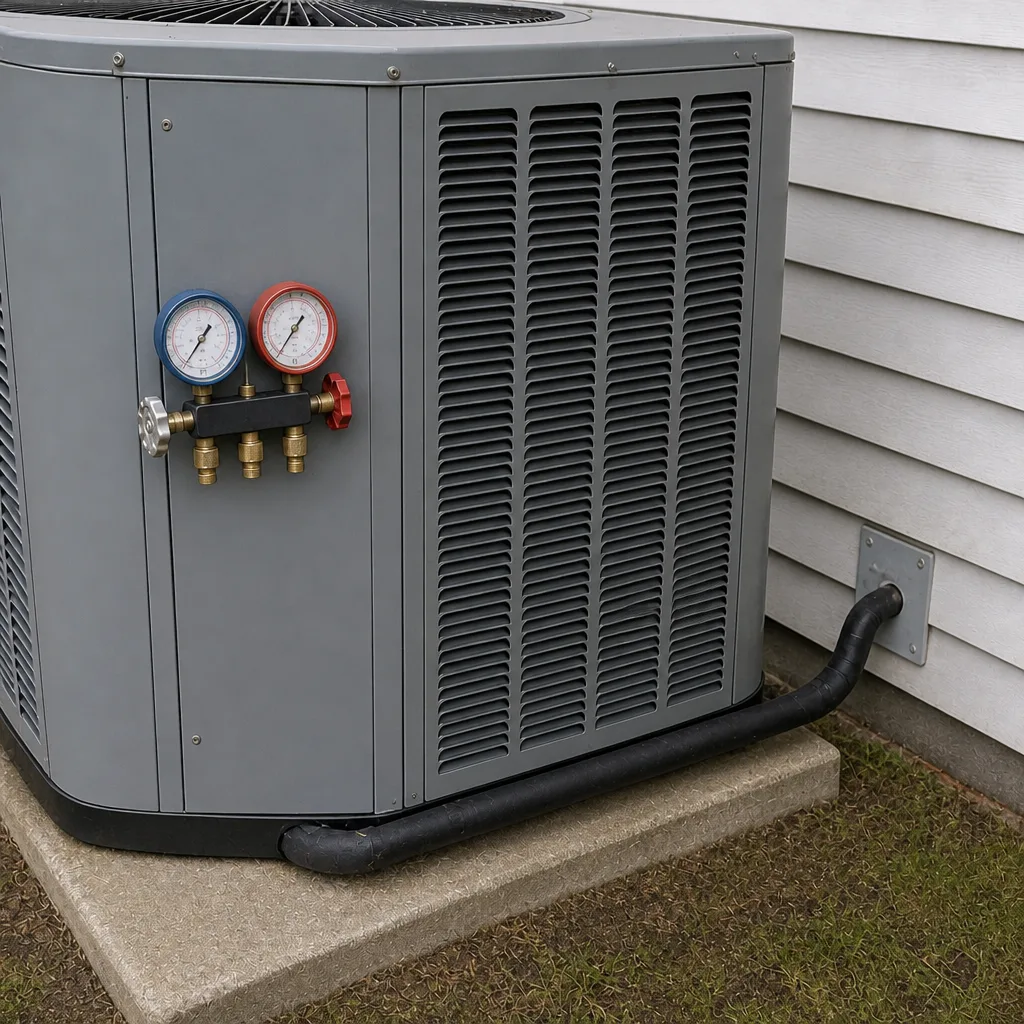
 Before
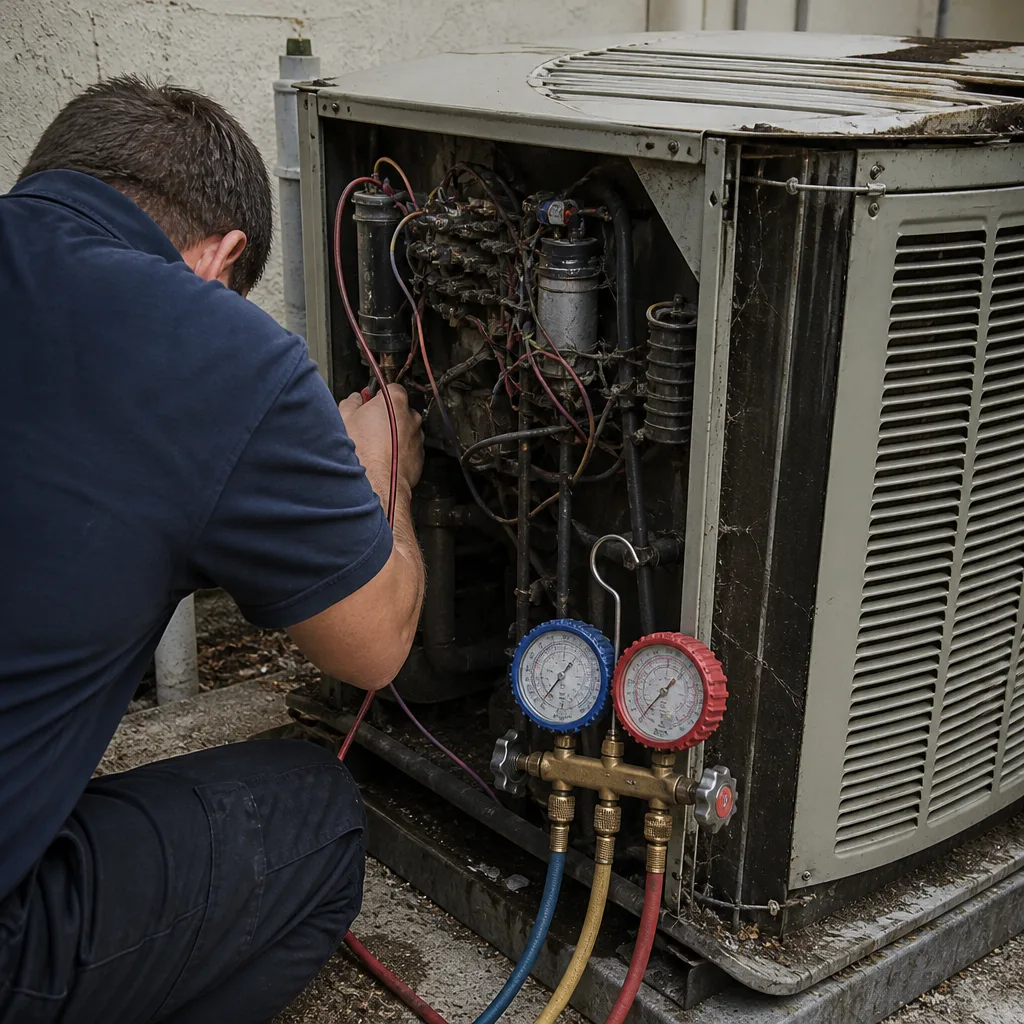
 After
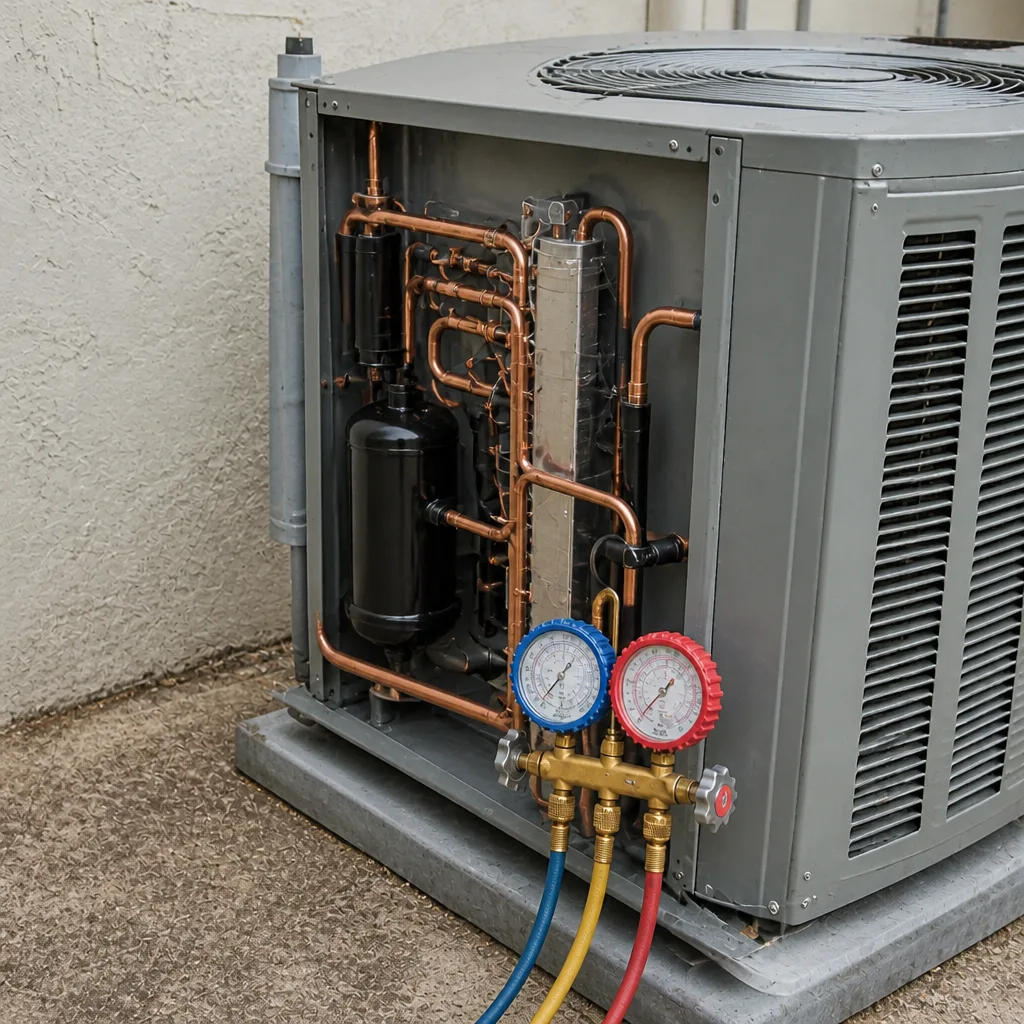
 Before
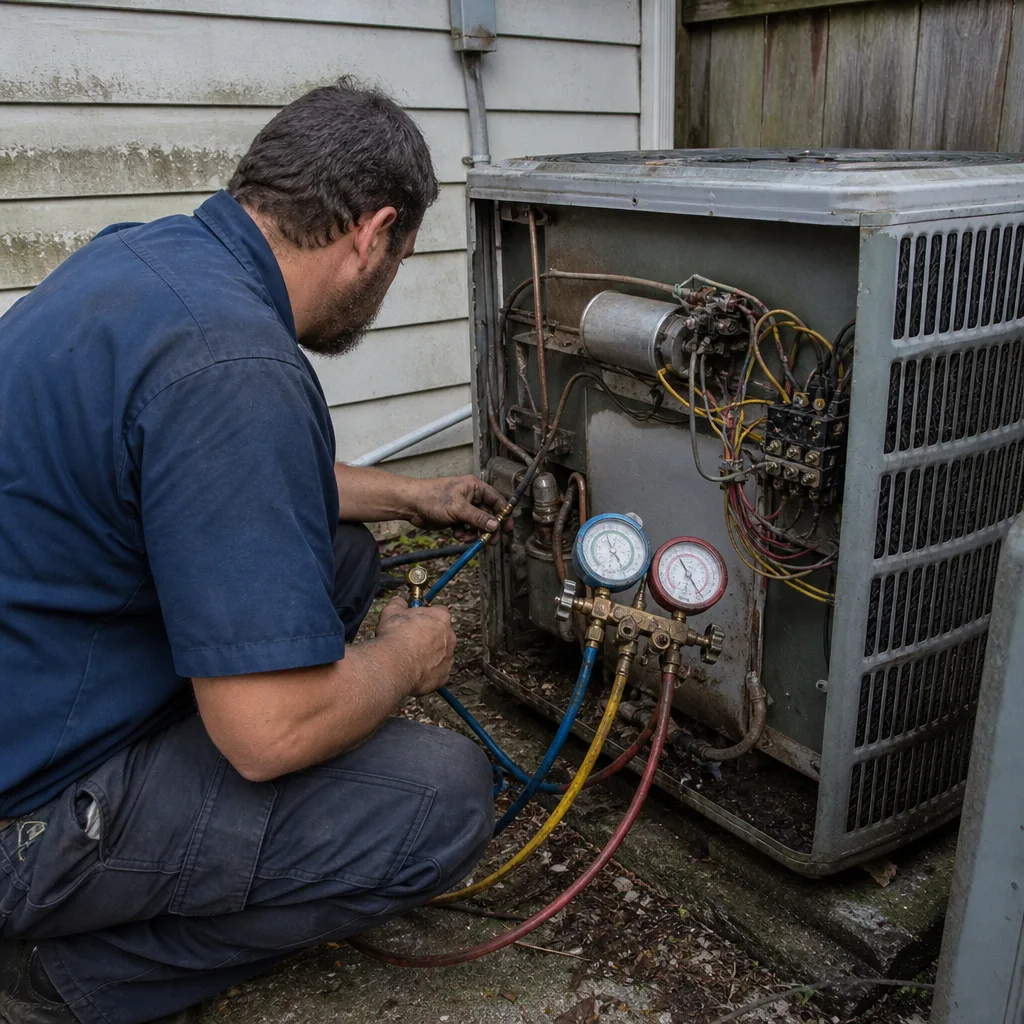
 After
 Before
 After
When to Call a Professional
Some things are worth a phone call rather than a weekend of research. If your thermostat can’t keep up during a summer afternoon, if the outdoor unit is short-cycling or icing up, if there’s moisture pooling around the air handler, or if your electric bill has jumped while comfort has dropped, get an assessment before small problems become replacements. If you’re planning a new install or a system replacement, start with a load calculation and a written fixed-price quote. For homes in Palm Coast, Sycamore AC Repair offers free estimates in Palm Coast, and we’re certified to work on nine major brands, so we’ll service what you already own or match a new system to your home. Call (855) 360-7379. We answer 24/7.
Frequently Asked Questions
Typical AC installation costs in Palm Coast fall into a broad range depending on equipment tier, tonnage, duct condition, and whether coastal-rated coils are specified. A standard single-stage replacement with existing accessible ductwork sits on the lower end, while a higher-efficiency variable-speed system with new attic ductwork runs at the top. Special-order equipment and permit fees are usually included in a written fixed-price estimate. Call (855) 360-7379 for an exact quote; estimates are free.
A standard replacement is usually completed in one day once the permit is pulled and the equipment is on site. From signed contract to first cool air, expect one to two weeks in most cases, longer if the system is a special order or if the home needs duct modifications. The install itself is the short part; the front-end load calculation, permit, and equipment lead time take the bulk of the calendar.
Yes. A mechanical permit is required for an AC replacement in Flagler County, and the property owner is legally responsible for ensuring it’s pulled even though the contractor files it. The permit triggers a final inspection that verifies the equipment and installation meet code. Skipping it can complicate a future sale and may void manufacturer warranty coverage. Always confirm the permit number in writing before work begins.
Palm Coast’s long cooling season means an oversized or undersized unit has more hours each year to reveal its problems. Oversized systems short-cycle and fail to dehumidify in a market where humidity routinely climbs above 90%. Undersized systems run nonstop during the hottest weeks and never catch up. Manual J load calculation is the only way to size correctly, and it’s the step most often skipped by installers who quote over the phone.
A correctly sized system with a variable-speed or two-stage blower handles coastal Florida humidity much better than a single-stage unit because it runs longer at lower output and pulls more moisture from the air. Proper duct sealing and insulation play just as big a role. If your main complaint is clamminess rather than temperature, that’s the conversation to have with your installer before equipment is selected.
Repair is usually the right call if the system is under 10 years old, the repair cost is a small fraction of replacement, and efficiency is still reasonable. Replacement becomes the better answer when the unit is older, has needed repeated repairs, uses a refrigerant that’s getting expensive, or the coil is failing. The right decision is the one that gives you the lowest total cost over the next decade. Call (855) 360-7379 for a brand-neutral assessment; estimates are free.
The Bottom Line
AC installation in Palm Coast comes down to four decisions: getting the load calculation right, choosing equipment that survives salt air and humidity, pulling the permit and confirming the inspection, and trusting a contractor who recommends the system your home needs rather than the one that’s easiest to sell. Get those right and the rest of the details fall into place. Get them wrong and you’ll spend the next decade wondering why a brand-new system never quite cools the house. We’re certified on nine major brands including Rheem, York, Daikin, and Bryant, and HVAC is all we do. If you’re in Palm Coast and planning a system replacement, get a written quote with the model number, tonnage, and permit plan spelled out.
Call (855) 360-7379 for a free estimate. We answer 24/7. Fast dispatch from 7am to 7pm, Sunday through Friday. Sycamore AC Repair handles AC installation and heating repair under one roof, with brand-neutral recommendations and no dealership obligations steering the call.
Written by the team at Sycamore AC Repair.