
Last updated November 16, 2026
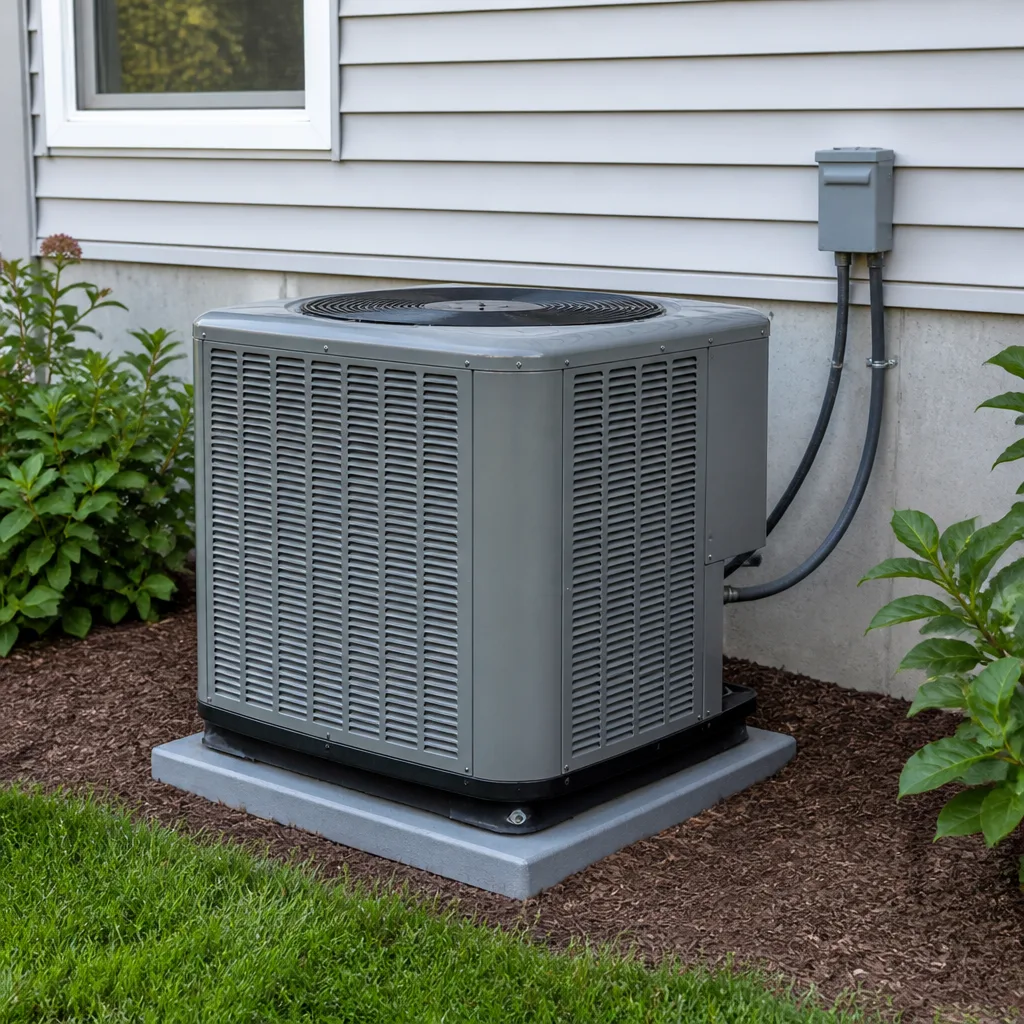 AC repair
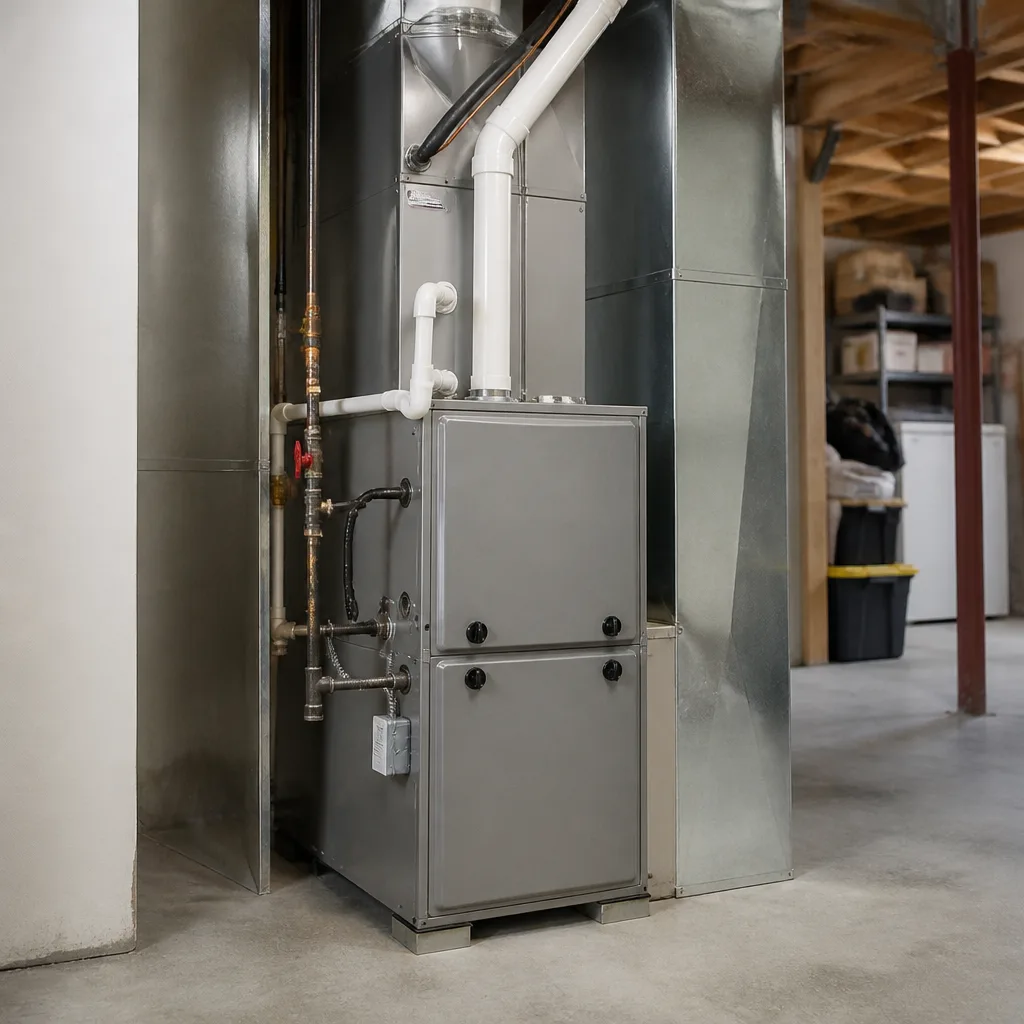 Furnace & heating
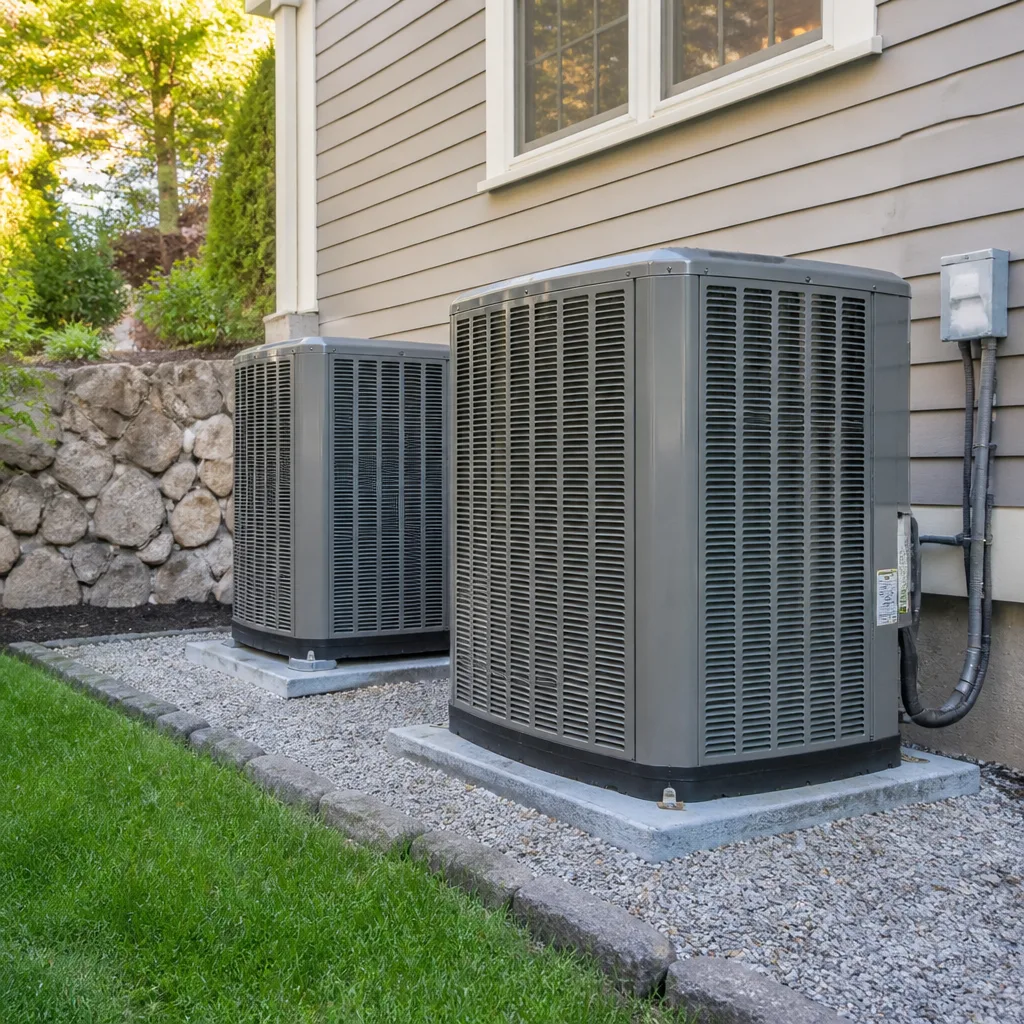 Heat pumps
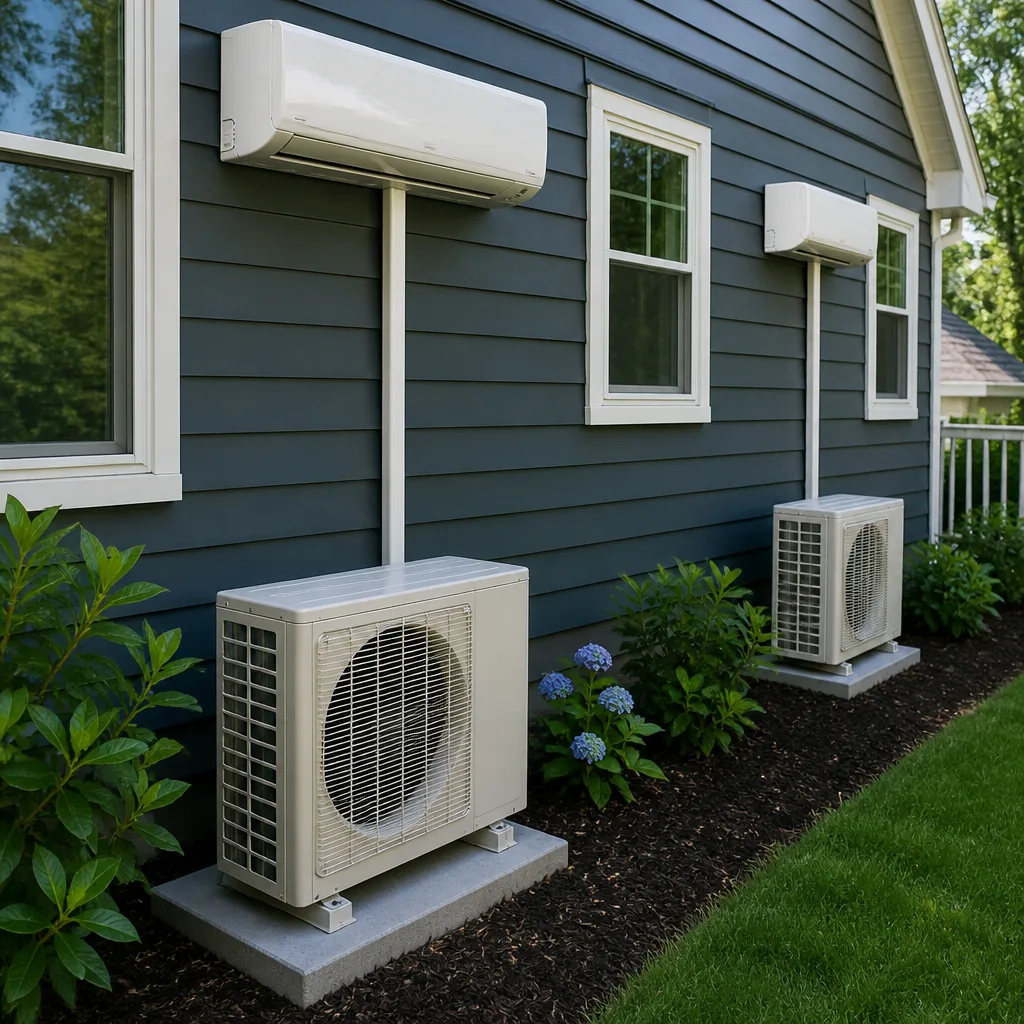 Ductless mini splits
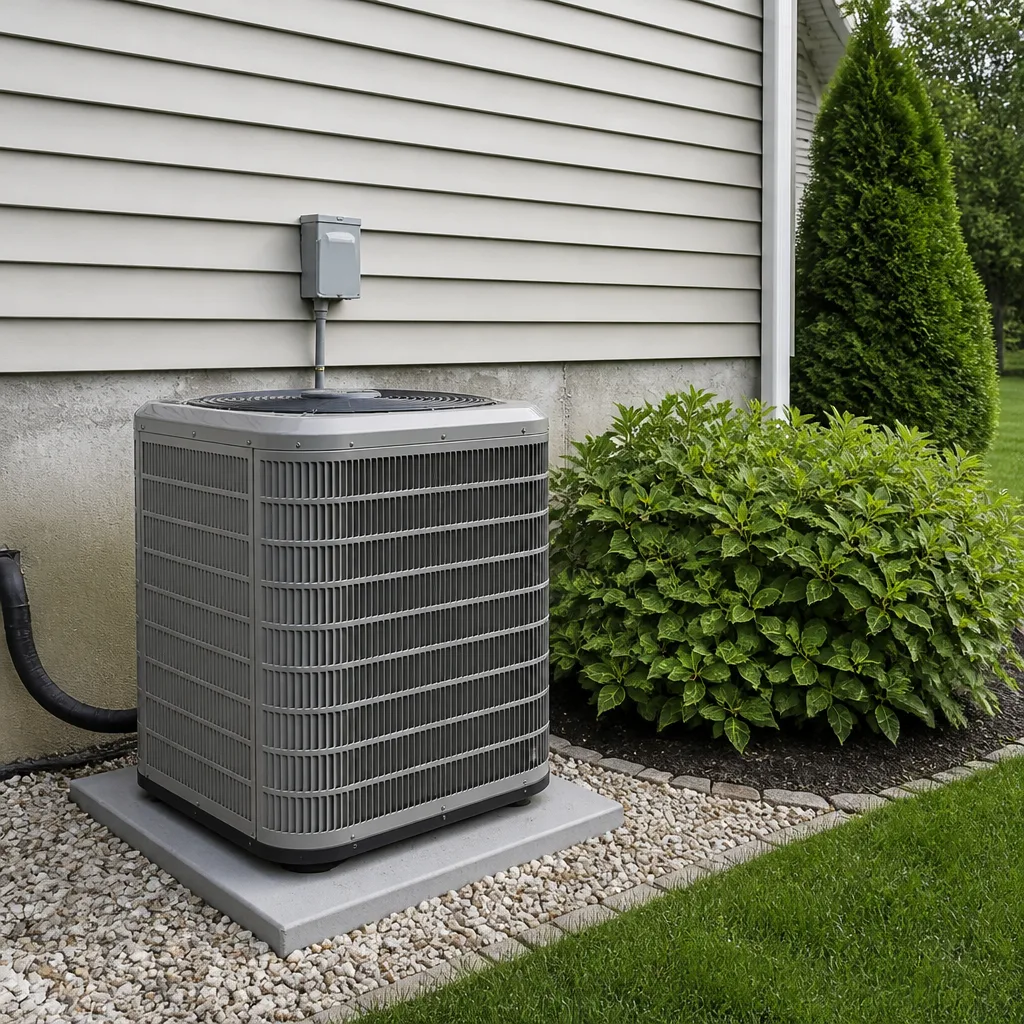 Carrier
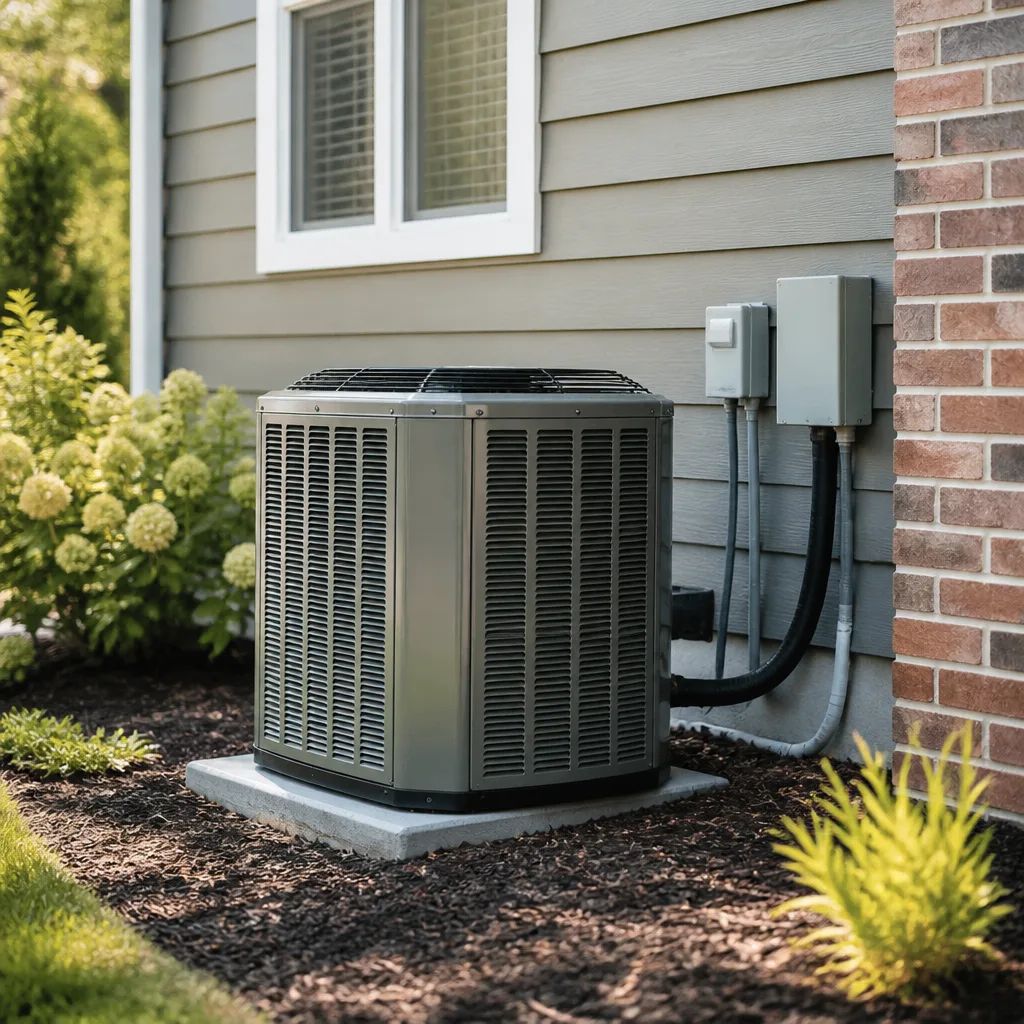 Trane
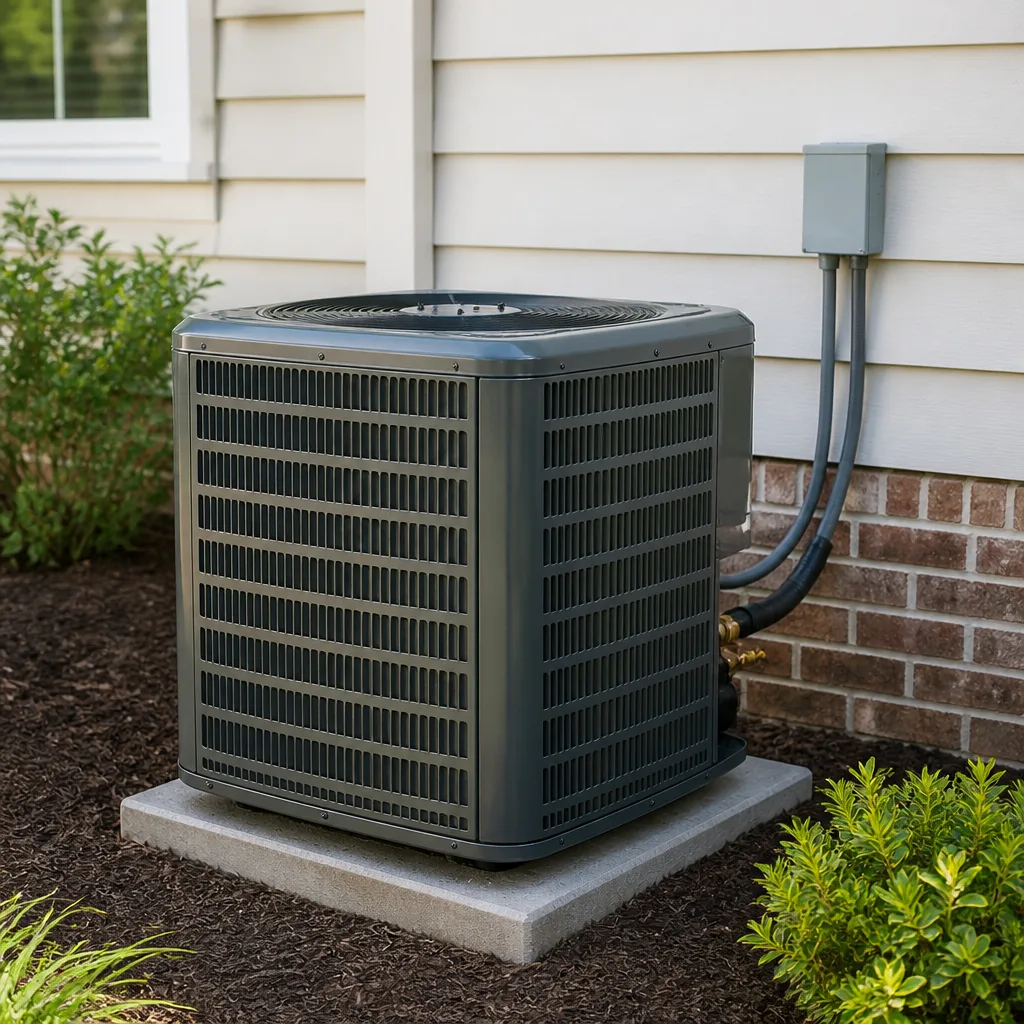 Goodman
Seasonal tune-up and full diagnostic on your Carrier, Trane, or Goodman system - readings shown to you before any repair is proposed
Diagnosis first, numbers second - you approve the repair price before a single part goes in.
Get your free estimateDIY vs Professional HVAC: The Palm Coast Homeowner’s Decision Guide
Most DIY HVAC advice online is written for homeowners in Ohio or Texas, and it treats the whole question as a matter of confidence: if you’re handy enough, go ahead and try it. That framing misses the point in Florida. Here, the sharper boundary isn’t skill, it’s law. Federal and state rules decide what an unlicensed homeowner may legally touch on a heating and cooling system, and crossing that line can cost you more than the repair would have. In this Palm Coast guide, we’ll walk the actual legal edge, separate the DIY tasks that are genuinely safe from the ones that aren’t, and show you where professional work pays for itself.
Quick Answer
Florida law lets homeowners handle routine maintenance on their own HVAC systems – filter changes, thermostat swaps, drain line clearing, and outdoor coil cleaning – but refrigerant handling, electrical work inside the unit, gas connections, and compressor or motor replacement belong to licensed professionals. Doing the second group yourself is a federal violation under the EPA Section 608 refrigerant rule, and it can void your manufacturer warranty and complicate a future home sale. The rest of this guide shows you exactly where the line sits in Palm Coast.
Styles & brands we work with
- AC repair
- Furnace & heating
- Heat pumps
- Ductless mini splits
- Carrier
- Trane
- Goodman
Table of Contents
- What Does Florida Law Actually Permit You to Do?
- Which HVAC Tasks Are Genuinely Safe and Legal in Palm Coast?
- How Can DIY Work Void Your Manufacturer Warranty?
- Why Do Palm Coast Coils Need a Professional’s Eye?
- What Do You Actually Save by DIYing, and What’s the Risk?
- Why Is Refrigerant Handling a Hard Line?
- How Do You Choose the Right HVAC Professional?
- Common Mistakes to Avoid
What Does Florida Law Actually Permit You to Do?
Florida law allows homeowners to perform maintenance on their own HVAC systems but requires a licensed contractor for anything involving refrigerant, electrical work beyond a simple thermostat swap, or gas connections. The specific rule that catches most do-it-yourselfers off guard isn’t in Florida’s building code at all – it’s federal. The EPA’s Section 608 Clean Air Act regulation makes it illegal for anyone without EPA 608 certification to purchase, handle, or discharge refrigerant. That includes the R-410A and R-454B that sit inside your condenser, no matter how legally you acquired the can.
Here’s how the line breaks down in practice:
- Legal for a homeowner: filter replacement, thermostat replacement (line-voltage low-current types), drain pan and drain line cleaning, outdoor coil rinsing, clearing debris from around the unit, and visually inspecting the cabinet.
- Requires a licensed professional: adding or recovering refrigerant, brazing or repairing refrigerant lines, replacing the compressor, repairing the electrical panel or contactor, gas furnace line work, and any work that requires opening the sealed refrigerant circuit.
- Permits: most cities require a permit for full system replacement, and the permit is issued to a licensed contractor. Ask your city’s building department if you’re unsure what your specific project needs.
What “licensed” means for the contractor is worth understanding too. Florida has separate license classes for HVAC contractors, and not every license allows every type of work. When you hire, ask which license class the contractor holds and confirm it covers the specific job. A responsible company will have a straight answer, and if you need help interpreting what a job requires, our team is glad to point you to the right source. If you’re in Palm Coast and want to talk through a specific situation, our Sycamore AC Repair team handles questions like this every week.
Which HVAC Tasks Are Genuinely Safe and Legal in Palm Coast?
These four tasks are safe for a typical Palm Coast homeowner and won’t void warranties as long as you use the right parts and don’t damage anything in the process. Each one has a technique that matters – do them the wrong way and you can cause more trouble than you prevent.
1. Replacing the air filter
- Turn the thermostat to OFF before you start.
- Locate the filter slot – it’s usually at the return-air grille or inside the air handler cabinet.
- Note the arrow on the filter frame. It points in the direction of airflow, toward the air handler.
- Slide the old filter out and drop the new one in with the arrow facing the same way.
- Write the date on the filter frame with a marker so you know when it’s due next.
Change the filter every 2-3 months in a Palm Coast home. If you have pets, run it closer to every 60 days. A clogged filter is the single most common cause of frozen coils and high electric bills in this climate.
2. Swapping a thermostat
- Kill power at the air handler breaker, not just the thermostat.
- Photograph the wiring before you disconnect anything.
- Match wire-for-wire when you install the new unit. Labels like R, Y, G, W, and C are standard, but confirm against the old thermostat’s manual.
- Restore power and test in cooling mode. If the system doesn’t respond, the low-voltage wiring is the first thing to check.
Do not attempt a thermostat replacement if you’re not comfortable identifying breaker panels. If your panel is unlabeled or looks unclear, treat it as an electrical job and call a pro – the panel is a genuine hazard.
3. Clearing the condensate drain line
In a humid climate like Palm Coast’s, drain lines grow algae between service visits. A slow drain eventually overflows the pan and can soak your ceiling or trigger a float switch that shuts the system off. Locate the PVC drain coming out of the air handler and the exterior termination point. A wet-dry vacuum at the exterior end will often pull the clog out. Follow that with a cup of plain white vinegar poured down the access tee to slow the next one. Never use a wire coat hanger or drain snake inside the line – you’ll puncture the PVC and create a leak.
4. Cleaning the outdoor unit
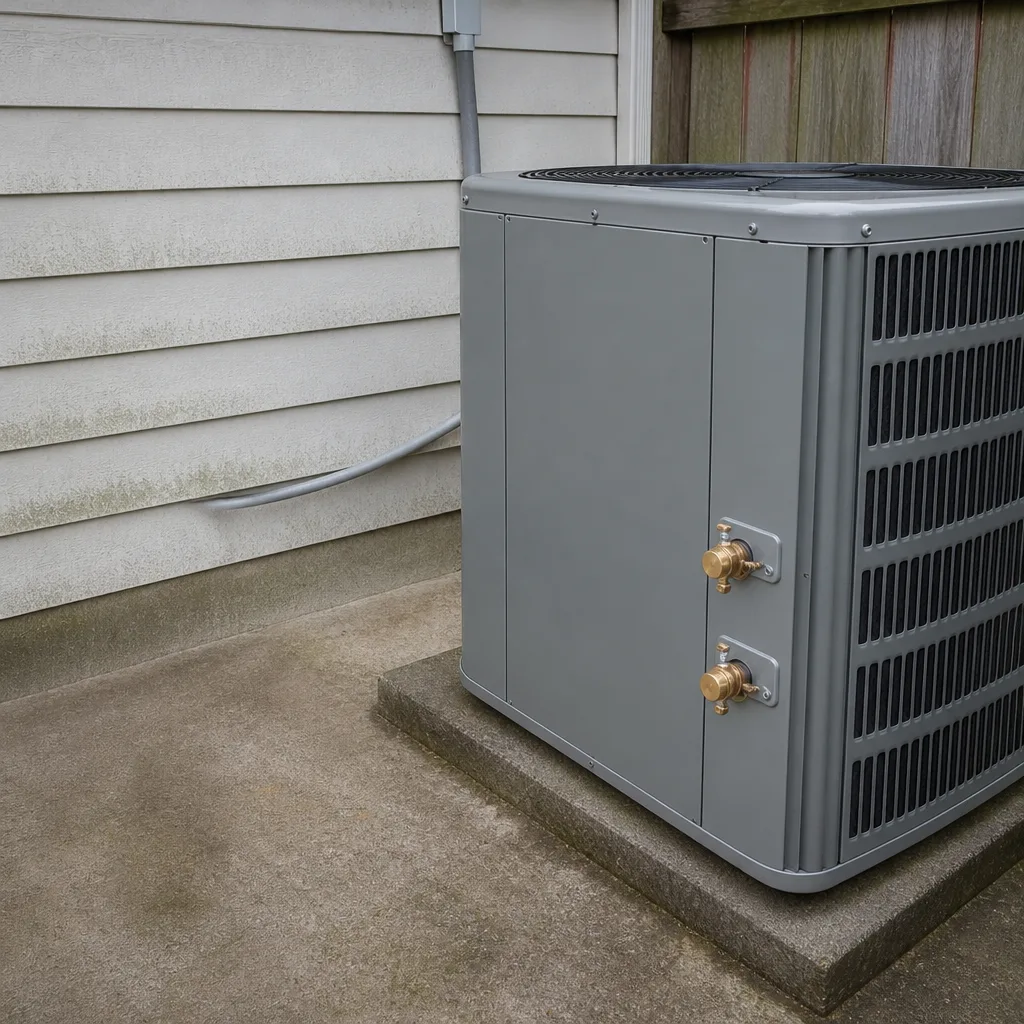
Turn the breaker off. Rinse the outdoor coil with a garden hose on low pressure, working from the inside out. Never use a pressure washer – it bends coil fins and permanently reduces efficiency. Clear leaves and grass clippings from the base and give the unit at least two feet of clearance on all sides. Do this once a month during the cooling season in Palm Coast; yard debris builds up fast here.
How Can DIY Work Void Your Manufacturer Warranty?
Every major manufacturer – Carrier, Trane, Lennox, Goodman, and the rest – writes a warranty that requires installation and repair by a licensed professional for the warranty to apply. The fine print is usually in the “Limitations” or “Exclusions” section. If a homeowner works on the sealed system and the compressor fails a year later, the manufacturer can – and often does – deny the claim.
What documentation do you actually need to defend against that?
- Proof of professional installation: a dated invoice from a licensed contractor showing the equipment model and serial number.
- Registration: most manufacturers require the equipment to be registered within a set window after installation, usually 60 to 90 days. If the installing contractor doesn’t register it, the warranty typically defaults to a shorter base term. Confirm at handoff that your unit is registered.
- Service records: dated invoices for every professional repair or tune-up. If a claim is ever disputed, this is what tips the scale in your favor.
- Filter change log: a simple notebook entry or a photo of the filter with the date written on it. Some warranty adjusters will ask whether maintenance was performed; you want to be able to show it.
If you’re buying a home in Palm Coast, ask the seller for these records. A well-documented system is worth real money, and a system with a voided warranty is a liability the buyer inherits. Our AC installation team hands every customer a registered warranty packet on the day of install; that’s the standard to expect from any contractor.
Why Do Palm Coast Coils Need a Professional’s Eye?
Corrosion on an evaporator or condenser coil starts on surfaces a homeowner can’t see, and a visual DIY inspection misses it every time. That’s not a criticism of homeowners – it’s a physical reality. Coil corrosion begins on the inside surfaces of the fin-and-tube assembly, at the tube-to-fin contact points, and along the braze joints. You can look at the coil from the outside and see clean aluminum while the inside of the assembly is already pitting.
What a technician brings to the inspection:
- Split temperature measurement: the difference between return-air and supply-air temperature tells us whether the coil is transferring heat effectively. A coil with hidden fouling shows up here before a homeowner notices a comfort problem.
- Static pressure reading: restricted airflow across a fouled coil drives static pressure up and efficiency down. It’s measured with instruments, not eyes.
- Microleak detection: refrigerant leaks often start as pinholes at braze joints that no amount of visual inspection will reveal. An electronic leak detector or UV dye trace locates them.
- Fin comb and chemical cleaning: a deep clean every couple of years removes the biofilm and mineral buildup that a hose rinse can’t. Palm Coast humidity means that biofilm grows fast – faster than in dry markets.
The cost of a professional coil inspection is small compared to a coil replacement. When you factor in the warranty implications of getting it right, the math favors the professional look every time. If a technician catches corrosion early, we can often clean, treat, or seal the coil rather than replace it – a repair-or-replace call that’s genuinely a repair. Our furnace repair technicians handle the heating side of the same inspection; the coil maintenance on a heat pump follows the same rules whether the system is cooling or heating.
What Do You Actually Save by DIYing, and What’s the Risk?
The savings from a legal DIY task are real, and they’re worth claiming. Filter changes you do yourself save the technician’s trip to your home every eight weeks. Thermostat swaps save a service visit. But once you cross the legal boundary, the equation flips hard. Here’s how the numbers break down.
| Task | Typical DIY Savings | Risk If You DIY and Something Goes Wrong |
|---|---|---|
| Filter replacement | Modest: one less service visit per quarter | Almost none if the filter fits and the arrow faces the right way |
| Thermostat swap | Moderate: one service visit | Low if you kill the breaker and photograph wiring; electrical shock risk if you skip those steps |
| Drain line clearing | Small: a few minutes of your time | Water damage to the ceiling below the air handler if you use a wire and puncture the line |
| Outdoor coil cleaning | Moderate: one visit per season | Bent fins and reduced efficiency if you use a pressure washer |
| Refrigerant top-off | None – illegal without EPA 608 | Federal violation, voided warranty, discharge of refrigerant, injury risk from liquid refrigerant |
| Compressor replacement | None – legal for pro only | Voided warranty, no manufacturer coverage, potential refrigerant release |
| Furnace gas line work | None – legal for pro only | Gas leak, fire or carbon monoxide risk; permit required in most cases |
| Electrical panel work | None – legal for pro only | Shock, fire, code violation |
The pattern is clear. DIY pays off when the task is small, safe, and legal. It stops paying off the moment you cross into the second group, and the risk-adjusted cost of a serious mistake – voided warranty, water damage, refrigerant release, or a permit problem that stalls a future sale – dwarfs any savings from the initial job.
Why Is Refrigerant Handling a Hard Line?
Refrigerant handling is a hard line because the EPA Section 608 rule is federal law, and it applies the same in Palm Coast as anywhere in the United States. There is no homeowner exemption. Even if you can legally purchase a small cylinder of refrigerant – which is possible in some contexts – you cannot legally introduce it into a system or recover it from a system without EPA 608 certification.
Three reasons this rule is enforced:
- Ozone and climate impact: refrigerant released to the atmosphere damages the ozone layer and contributes to climate change. The rule exists to prevent that.
- Safety: liquid refrigerant causes frostbite on skin contact and displaces oxygen in enclosed spaces. A proper recovery setup handles both risks.
- System integrity: a system that’s low on refrigerant has a leak. Topping it off without finding and repairing the leak guarantees you’ll be back at the same problem in a few months, and the leak will continue damaging the compressor.
When a licensed technician tops off refrigerant, they recover the old charge, find the leak, repair it, evacuate the system to remove moisture, and recharge to the manufacturer’s spec. That process requires the certification, the equipment, and the access to the manufacturer’s specifications. There’s no shortcut that’s safe, legal, and effective. Ask any company you consider whether they’re EPA-certified before they touch the sealed system. Ours is; if you’d like a second opinion from a company that is, we can help.
How Do You Choose the Right HVAC Professional?
Choosing a contractor comes down to four things a homeowner can verify in a short phone call: license, EPA certification, brand capability, and repair-or-replace honesty. A contractor who passes all four will tell you what’s actually wrong with your system, not what’s convenient to sell.
- Verify the license. Ask which license class the contractor holds and confirm it covers heating, cooling, and refrigerant work. Florida’s Department of Business and Professional Regulation maintains a lookup you can search before you hire.
- Ask about EPA 608 certification. Any contractor handling refrigerant must have it. Ask directly.
- Check brand coverage. Not every contractor is fluent in every brand. If your home has a Trane system, a contractor who works exclusively on Carrier equipment will be a poor fit. We’re certified on nine of the industry’s major brands – Carrier, Trane, Lennox, Goodman, Rheem, York, Daikin, Bryant, and American Standard – and we have no exclusive dealership obligations to any of them. That means we can recommend the right system for your home, not just what’s on the truck.
- Ask whether they’ll explain repair vs. replace. A company that offers both options as legitimate paths is one you can trust with the decision. A company that only sells replacement is not.
The other layer is local focus. Generalist contractors who handle plumbing, electrical, and HVAC as one offering rarely have the depth on a heat pump’s inverter board or a variable-speed compressor that a specialist does. HVAC is all we do at Sycamore AC Repair, and every technician has focused their career on heating and cooling. Our technicians have up to 13 years of experience, and several have worked on the equipment brands most common in Palm Coast homes.
Common Mistakes to Avoid
- Ignoring the arrow on the filter. Installing a filter backward starves the system for airflow and can freeze the evaporator coil. The arrow points toward the air handler, always.
- Pressure-washing the outdoor coil. A pressure washer bends the fins irreversibly, and once fins are crushed the unit can’t move air the way it was designed to. Garden hose on low pressure, inside out, is the correct approach.
- Top-off refrigerant without finding the leak. Refrigerant doesn’t get consumed – if it’s low, there’s a leak. Adding more without a repair means the same problem will return, usually bigger. That’s also a federal violation without EPA 608 certification.
- Skipping the drain line until it clogs. In Palm Coast’s humidity, algae can narrow a drain line to a trickle in under a year. Once it overflows, you’re looking at ceiling damage from the air handler closet or the interior pan. Flush it a couple of times a season with vinegar.
- Not photographing thermostat wiring before disconnecting. Wire codes vary by brand and model, and once you pull the wires loose without a reference, you’re working from memory. Take the photo first.
- Buying a replacement filter without matching the MERV rating. A filter that’s too restrictive for the system chokes airflow and shortens compressor life. Match the MERV rating the manufacturer specifies for your unit.
- Assuming the warranty will cover a failed repair. If the repair was made by an unlicensed person, the warranty typically doesn’t apply. Confirm your installer registers the equipment and keep the paperwork.
- Skipping the permit on a full replacement. Most cities require a permit for a complete system changeout. A contractor who shrugs at that is telling you something about how they handle the rest of the job.
See the difference
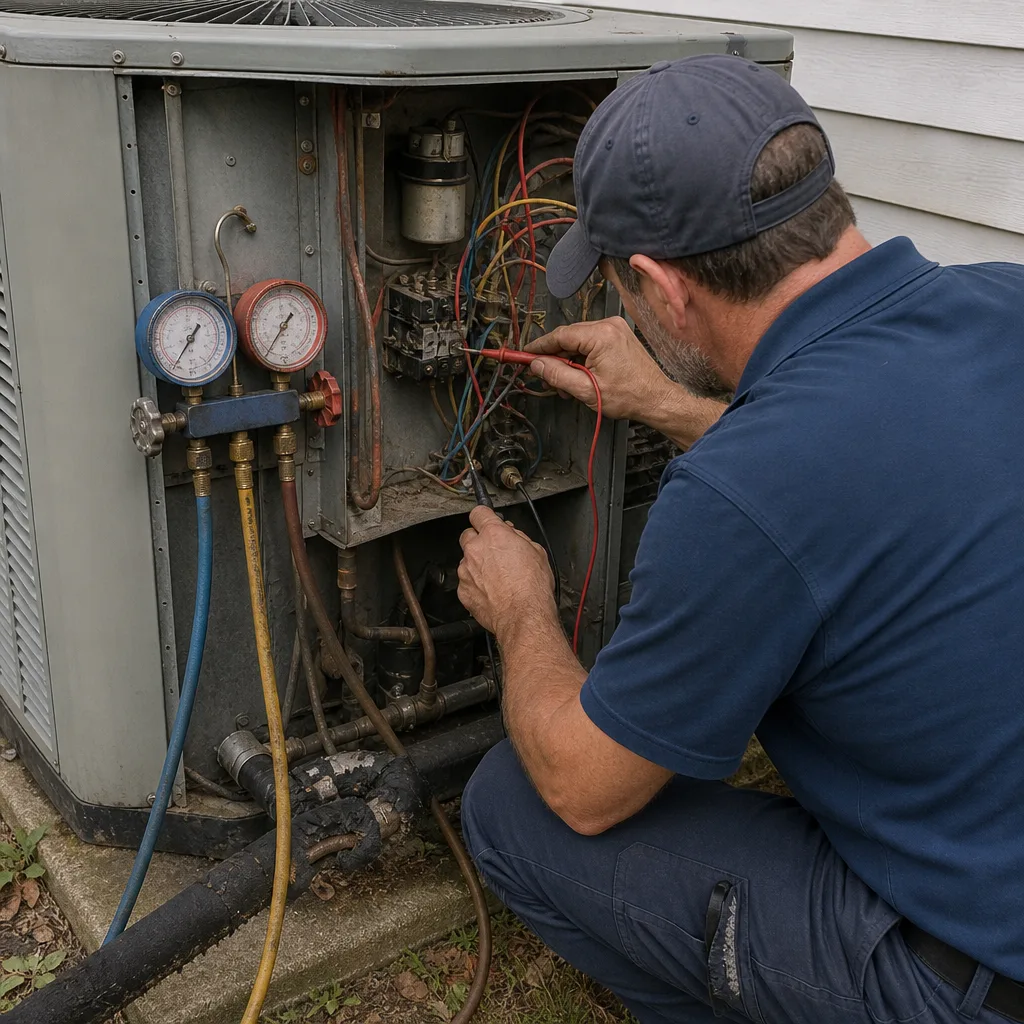 Before
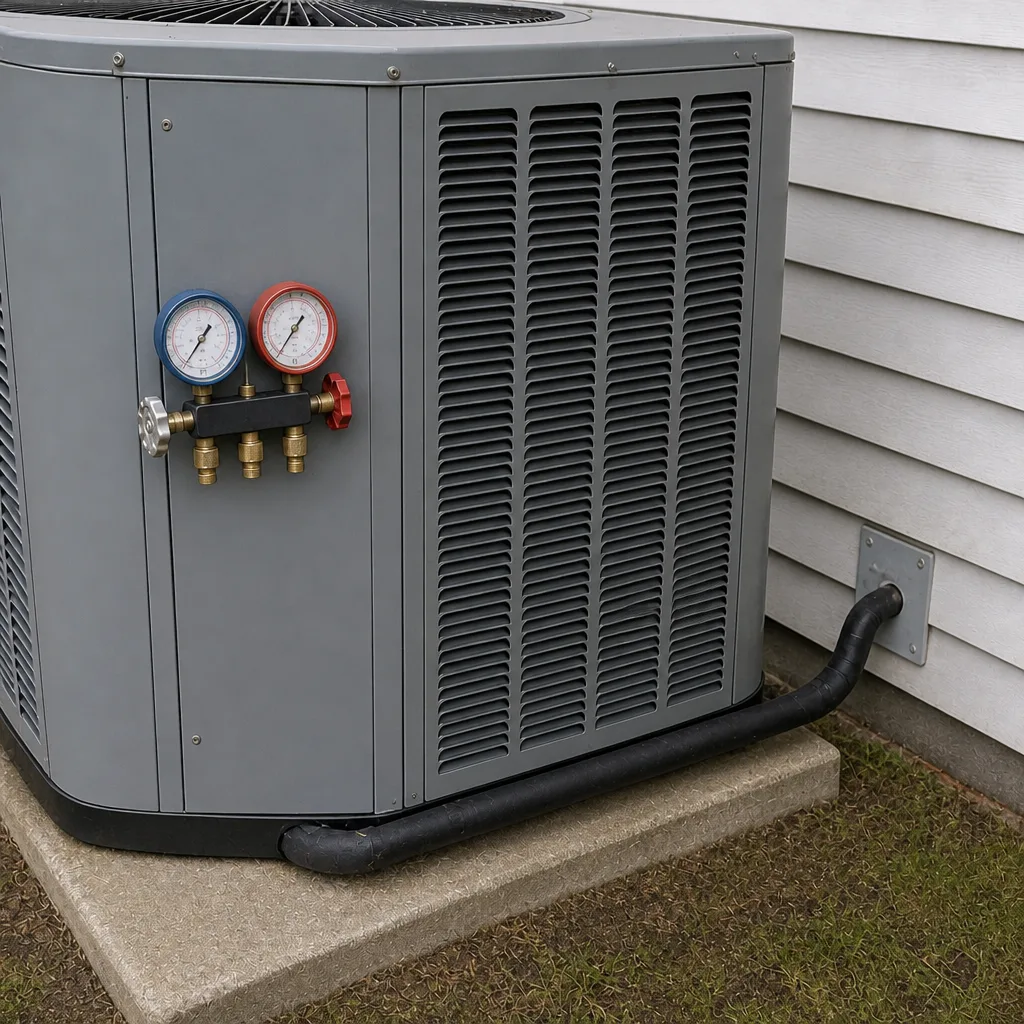 After
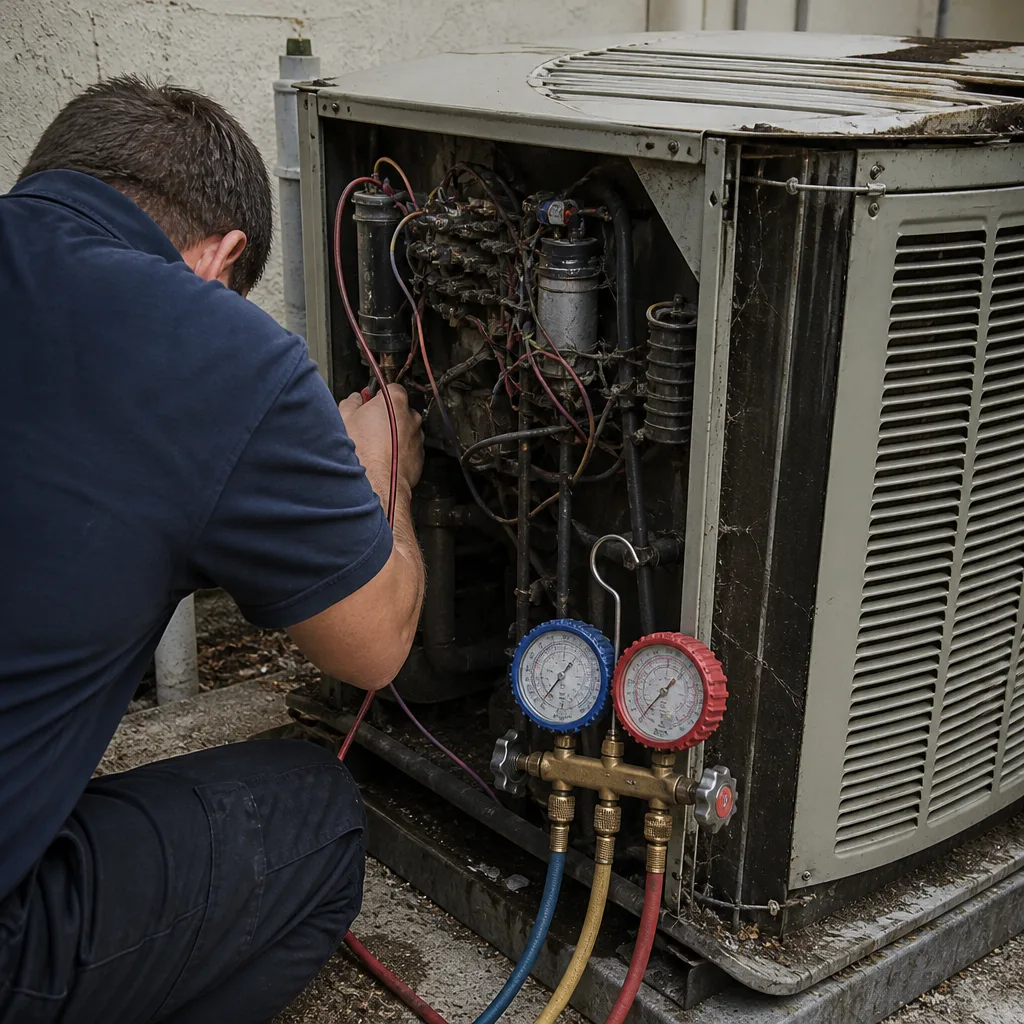 Before
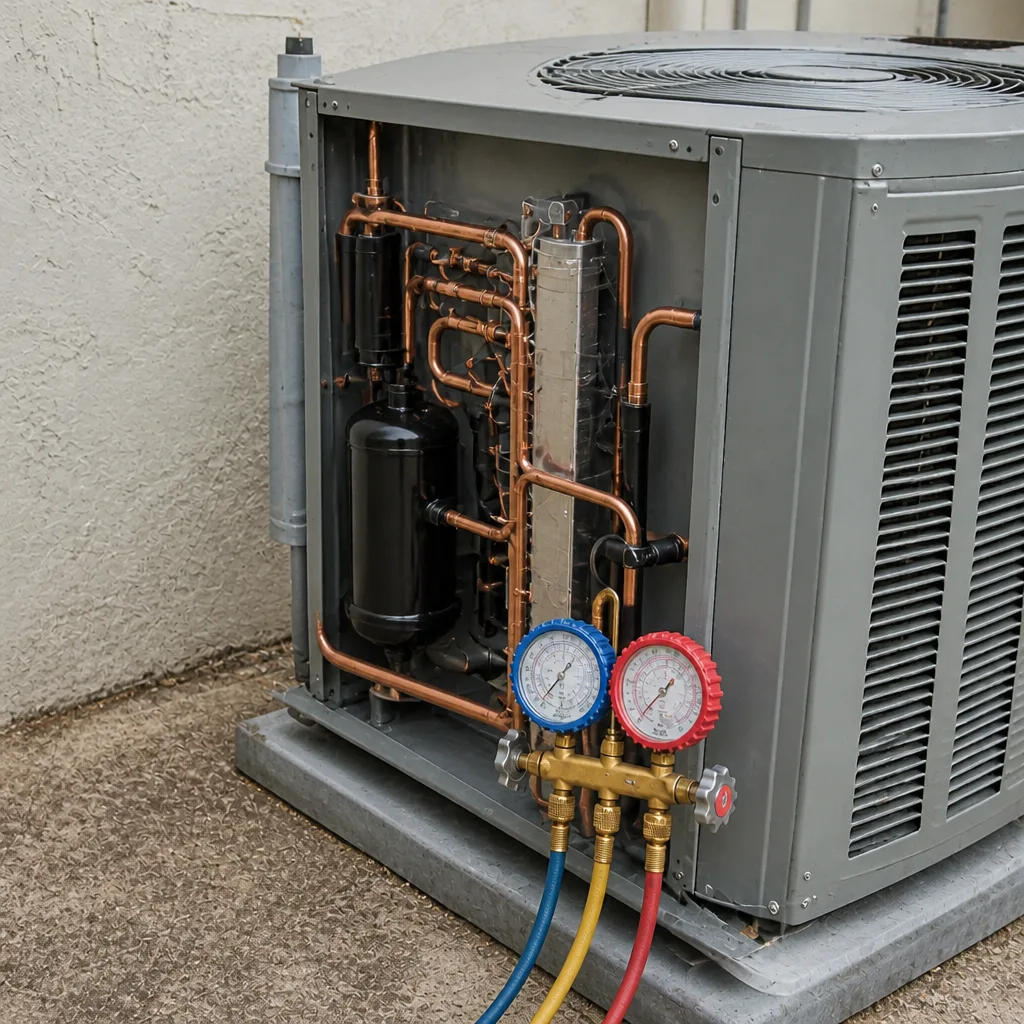 After
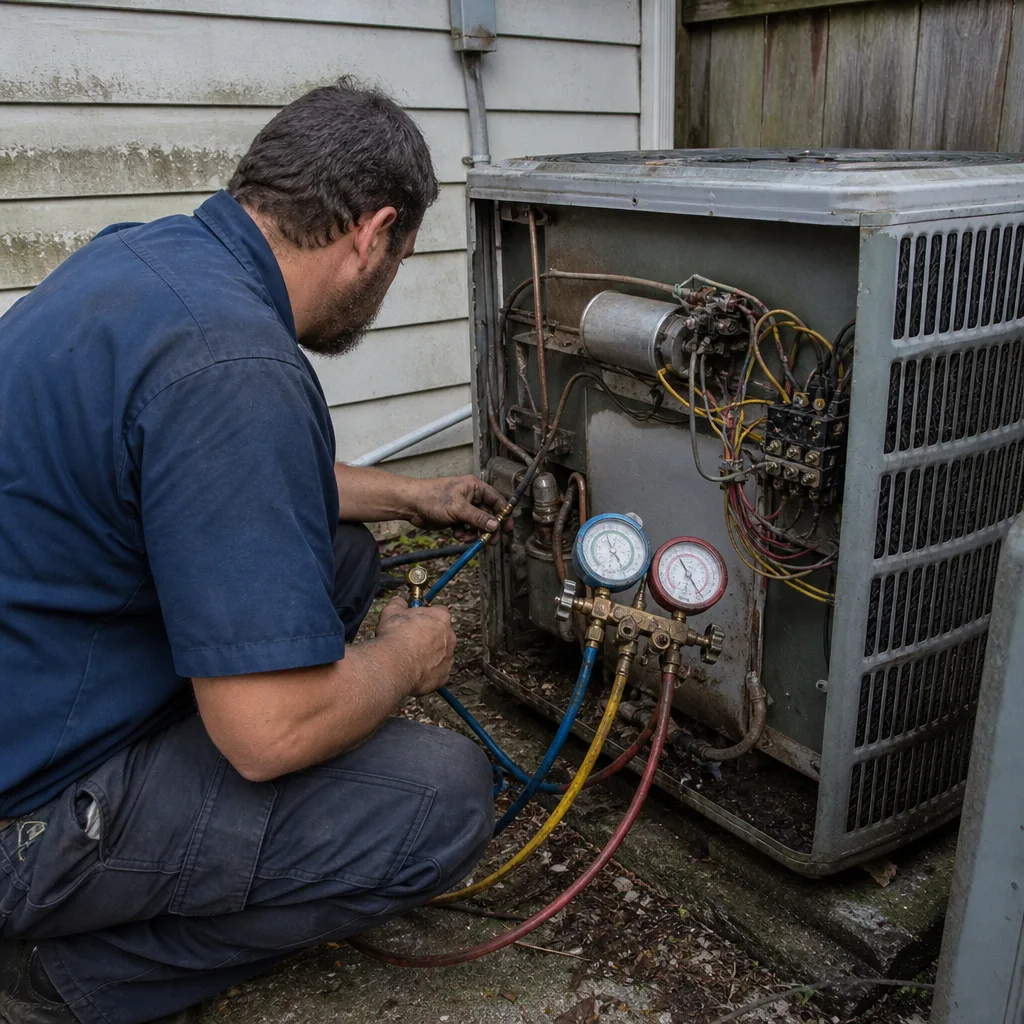 Before
 After
When to Call a Professional
Call a professional if the issue involves refrigerant, electricity inside the unit, gas lines, or anything that opens the sealed system. That includes a system that’s not cooling, ice on the indoor coil, a compressor that’s short-cycling, a furnace that won’t ignite, an electrical panel that trips when the AC runs, or a heat pump that runs but doesn’t produce heat. Call us too if you’ve lost confidence in a prior repair, if a quote you received feels like an upsell, or if you want a second opinion before committing to a full replacement.
Also call if your system is more than a decade old and you’re facing a repair in the high hundreds. Any honest contractor will tell you that a repair-replace conversation starts with the age and condition of the equipment, and we’ll give you the honest answer. Sycamore AC Repair offers free estimates in Palm Coast – call (855) 360-7379. We answer 24/7. Fast dispatch from 7am to 7pm, Sunday through Friday. If you’re in a nearby community and want to know whether we cover your area, you can read more about how we work in Palm Coast.
Frequently Asked Questions
No. The EPA Section 608 rule makes it a federal violation for anyone without EPA 608 certification to purchase, handle, or discharge refrigerant. Even if the cylinder was legally purchased, introducing it into a system requires the certification. Call (855) 360-7379 for a quote from an EPA-certified technician – estimates are free.
No. Filter replacement is routine maintenance and is expected of homeowners under every major manufacturer’s warranty. What voids the warranty is unlicensed repair on the sealed system, electrical components, or gas connections. Keep a simple log of filter changes so you can show maintenance was performed if a claim is ever questioned.
Any task that requires opening the sealed refrigerant circuit, touching a gas line, or working inside the electrical panel is beyond a homeowner’s legal scope. Filter changes, thermostat swaps, drain-line clearing, and outdoor coil rinsing are the four tasks that stay safe. If you’re unsure which category a task falls into, call and we’ll tell you directly.
Yes, often. Palm Coast buyers and their agents frequently request the permit records for any HVAC system replacement, and an unpermitted install can complicate closing or require retroactive permitting. Most cities require a permit for a full system changeout, and the permit is issued to a licensed contractor. Ask your city’s building department what your specific project needs before scheduling.
Ice forming on the indoor coil, refrigerant visible as oily residue near fittings, warm air from the vents while the system runs, a burning smell when the system starts, or a compressor that hums and shuts off within seconds. Any of those mean turn the system off at the thermostat and call. Same-day service is available. Call (855) 360-7379 – estimates are free.
They overlap on the visible tasks but diverge on the measurements. A homeowner’s monthly outdoor coil rinse and quarterly filter change keep the system breathing. A professional tune-up adds static pressure readings, split-temperature measurements, refrigerant charge verification, electrical contact inspection, and a coil inspection you can’t do from the outside. Both matter – they’re not substitutes for each other.
The Bottom Line
The line between DIY and professional work on your HVAC system in Palm Coast isn’t about confidence – it’s about law and liability. Filter changes, thermostat swaps, drain-line clearing, and outdoor coil rinsing are yours to handle, and doing them consistently keeps a system running well. Refrigerant work, gas connections, electrical work inside the unit, and compressor replacement require a licensed, EPA-certified professional. Beyond the legal question, a professional inspection catches the things a visual check misses – hidden coil corrosion, refrigerant leaks, and electrical wear that leads to failures. The right answer usually isn’t “DIY or call a pro” but “DIY the small stuff and let the pro handle the rest.”
If you need that second opinion, either on a repair you’re considering or a replacement you’ve been quoted, call (855) 360-7379 for a free estimate. We answer 24/7. Fast dispatch from 7am to 7pm, Sunday through Friday. Nine major brands serviced – including yours. Repair or replace? We’ll give you the honest answer.
Written by the team at Sycamore AC Repair.